
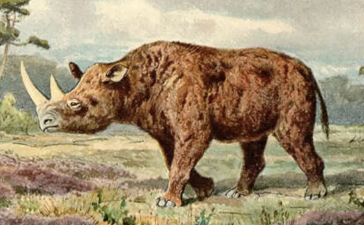
A remarkable Ice Age find from northeastern Siberia has enabled scientists to recover the genome of a woolly rhinoceros from undigested meat preserved in the stomach of a young wolf pup. The remains were found in permafrost near Tumat, offering rare genetic evidence about a species that vanished around 14,000 years ago. The study sheds light on the final phase of the woolly rhinoceros and the environmental pressures that likely drove its extinction.
Unique DNA Recovery
Researchers extracted DNA from a chunk of meat preserved inside the pup’s stomach. This allowed them to reconstruct a high-quality genome of the woolly rhinoceros. It is the first known case of a genome being recovered from prey tissue found in the stomach contents of a predator preserved in permafrost.
What the Genome Revealed
The genome was compared with those of two earlier woolly rhinoceros individuals, dating to about 18,000 and 49,000 years ago. The analysis showed:
- No clear sign of inbreeding or severe genetic decline.
- Genetic diversity remained stable until near extinction.
- The species appears to have collapsed rapidly rather than gradually.
Likely Cause of Extinction
The findings suggest that climate warming was the most likely driver of extinction. As the Ice Age ended, the steppe-tundra habitat preferred by woolly rhinoceroses shrank sharply. Human presence in the region had already existed for thousands of years, but there is limited evidence of large-scale hunting pressure on the species.
Ice Age Ecology and Preservation
The wolf pup, estimated to be seven to nine weeks old, had likely died soon after eating the meat. Its stomach contents also showed that it was still drinking milk, suggesting the meat may have been provided by its mother or pack members. The discovery marks the scientific value of permafrost remains in reconstructing ancient ecosystems and extinction patterns.
Last Modified: April 27, 2026