
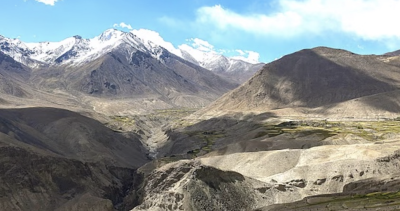
The evolution of the Ladakh Magmatic Arc in the north-western Himalaya has been decoded through rock chemistry, offering a 130-million-year record of plate tectonics. The study reconstructs how the Neo-Tethys Ocean, subduction, and the eventual India-Eurasia collision shaped one of the most important geological belts in the Trans-Himalaya.
What the Ladakh Magmatic Arc Is
The Ladakh Magmatic Arc is a belt of igneous rocks formed between the Jurassic and Eocene periods. It developed above the Neo-Tethys Ocean, where oceanic crust descended beneath the Eurasian margin. This long-extinct volcanic system records the transition from oceanic subduction to continental collision.
Three Major Magmatic Phases
Researchers identified three distinct phases of magmatic activity:
- 160–110 million years ago – pre-collisional island arc activity.
- 103–45 million years ago – syn-collisional magmatism linked to the forming Ladakh Batholith.
- Less than 45 million years ago – post-collisional mafic dyke activity.
These phases show how the chemistry of magma changed as tectonic conditions evolved over time.
Key Geological Findings
The earliest rocks of the Dras-Nidar Island Arc Complex show a mantle-dominated magma source with limited sediment input. Later rocks from the Ladakh Batholith contain stronger continental chemical signatures, indicating recycling of sediments and crustal material into the magma. This shift reflects increasing interaction between the subducting slab, the sub-arc mantle wedge, and the crust during convergence.
Scientific Significance
The findings help explain how the Neo-Tethyan oceanic plate subducted northwards beneath Eurasia and how this process controlled the long-term magmatic evolution of the region. The study also strengthens understanding of the tectonic history of the Himalaya, especially the sequence of subduction, arc growth, and collision that preceded mountain building.
Last Modified: April 29, 2026