
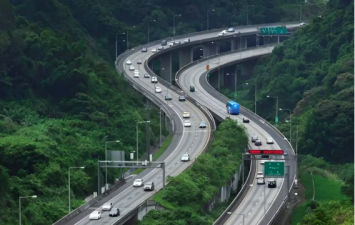
The National Highways Authority of India and the Wildlife Institute of India have released a report on wildlife movement through animal underpasses on the Delhi-Dehradun Economic Corridor. The study provides the first evidence of wild animals using these mitigation structures in an ecologically sensitive stretch of the Shivalik landscape. It marks how highway infrastructure can be designed to support both connectivity and biodiversity conservation.
Key Findings
The report titled Landscapes Reconnected documents wildlife use of underpasses between Ganeshpur and Asharodi. The monitored stretch covers about 18 km, with a total of 10.97 km of animal underpasses and an elevated corridor designed to allow free movement of animals. The area supports endangered species such as tigers, elephants, greater hornbills and king cobras.
Study Area and Methodology
The study divided the corridor into three zones covering riverbed, hilly terrain and Sal forest patches. Researchers used 150 camera traps and 29 AudioMoth acoustic recorders over 40 days. The monitoring generated 111,234 images of humans, domestic animals and wildlife. Of these, 40,444 images showed 18 wild species using the underpasses.
Species Movement and Behaviour
- Golden jackal was the most frequently recorded species.
- Nilgai, sambar and spotted deer also used the structures regularly.
- Indian hare showed consistent movement through the underpasses.
- Elephants were recorded 60 times, showing that large mammals can safely use the corridor.
Ecological Significance
The findings show that sound levels influence wildlife movement. Generalist species adapted more easily to traffic noise, while sensitive species preferred quieter sections. The study supports the use of sound barriers and other noise reduction measures in high-crossing areas. It also shows that planned underpasses and elevated corridors can reduce human-wildlife conflict, prevent habitat fragmentation and improve ecological connectivity.
Last Modified: April 28, 2026