
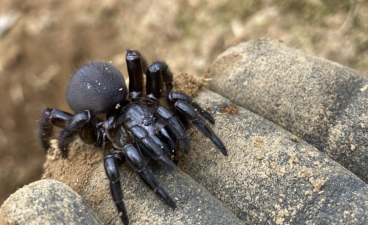
A new species of trapdoor spider has been discovered in the grasslands of Kolhapur district in Maharashtra. The species has been named Titanidiops kolhapurensis after its place of discovery. The finding is for biodiversity studies, but researchers have warned that the species may face local extinction because of rapid habitat degradation.
Discovery and Scientific Classification
The species was identified by a joint team from the Thackeray Wildlife Foundation and Shivaji University, Kolhapur. The study forms part of doctoral research in zoology and was published in the Journal of Natural History. The spider belongs to the trapdoor spider group, locally known in Marathi as darkari koli. It was classified under the Titanidiops genus based on its tooth structure and the arrangement of its eight eyes.
Habitat and Distribution
Researchers recorded the spider in a few specific pockets of Kolhapur, including:
- Shivaji University campus
- Shenda Park
- Kolhapur Chitranagari area
- Puikhadi hill
The species was found in natural forests and native grasslands. It was absent from areas converted into exotic tree plantations, especially those dominated by Gliricidia sepium.
Burrow Behaviour and Ecology
The spider constructs vertical or slanting burrows in flat or sloping grassy meadows. The burrow entrance is covered with a hinged, camouflaged door that blends with the soil. This makes the spider difficult to detect in the wild. Such specialised behaviour makes the species closely dependent on intact grassland habitats.
Threats and Conservation Concern
Researchers have warned that the species is under serious threat from habitat loss. Urban construction, intensive agriculture, and replacement of native vegetation with non-native trees are reducing suitable habitat. The study marks the need to protect grasslands and natural forest patches in and around Kolhapur to prevent the species from disappearing locally.
Last Modified: April 27, 2026