
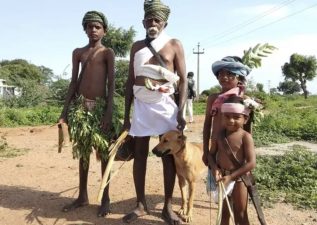
The Chenchu tribals inhabit the Amrabad Tiger Reserve in Telangana and rely on forest resources for their traditional livelihoods. In April 2026, they submitted representations opposing relocation efforts during the Prajavani programme in Hyderabad. The Chenchus are recognised as a Particularly Vulnerable Tribal Group (PVTG) under Indian classification.
Chenchu Tribe and Their Livelihood
The Chenchu community primarily depends on foraging and forest produce for sustenance. Women play a significant role as primary foragers. Their social structure and cultural practices are closely linked to the forest ecosystem. Displacement from the reserve threatens their traditional way of life and intergenerational dependence on forest resources.
Relocation Efforts and Compensation
Families willing to relocate are offered compensation packages including ₹15 lakh or rehabilitation packages comprising five acres of land, a house, and ₹3 lakh deposited in bank accounts. Some families have already received compensation cheques. Reports indicate that some forest officials have used threats related to deprivation and tiger attacks to encourage relocation.
Legal Framework and Government Response
The Wildlife (Protection) Act, 1972, as amended in 2006, emphasises coexistence of tribal communities with wildlife and considers relocation as a last resort. Telangana State Planning Board Vice-Chairman G. Chinna Reddy assured the Chenchu tribals in April 2026 that no forced evictions would take place and proposed dialogue between forest officials and tribal representatives.
Challenges and Community Divisions
While many Chenchus oppose relocation, some families dependent on agricultural labour with non-Chenchu communities show willingness to move. The issue reflects the complex interaction between conservation policies and tribal rights within protected areas.
Last Modified: April 20, 2026