
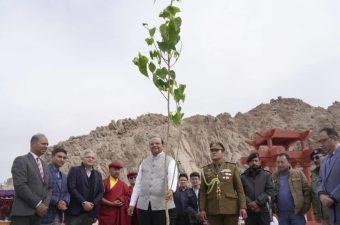
On 18 April 2026, Lieutenant Governor Vinai Kumar Saxena laid the foundation stone for India’s first Petroglyph Conservation Park at Sindhu Ghat in Leh. The event coincided with World Heritage Day. The park is intended to preserve Ladakh’s ancient rock carvings, known as petroglyphs, which face threats from unregulated tourism, infrastructure development, and lack of awareness.
Petroglyphs: Definition and Significance
Petroglyphs are prehistoric images, symbols, or carvings etched or engraved onto rock surfaces. Ladakh contains one of the most extensive collections of petroglyphs in South and Central Asia. These carvings depict early human life, wildlife, and cultural transitions. Some of the oldest petroglyphs in Ladakh bear inscriptions in ancient languages such as Chinese, Arabic, and Sanskrit.
Conservation Efforts and Park Features
A Memorandum of Understanding was signed between the Department of Archives, Archaeology and Museums and the Archaeological Survey of India for joint preservation of petroglyphs. The park will collect petroglyphs from vulnerable and isolated sites across Ladakh to provide a curated and educational setting. Nearly 400 sites in Ladakh contain petroglyphs, with those along the Indus and Zanskar Rivers at significant risk of damage.
Geographical and Cultural Context
Ladakh’s petroglyph sites are distributed across its mountainous terrain, especially near river valleys. These carvings provide insights into the region’s prehistoric and historic cultural exchanges. The presence of inscriptions in multiple ancient languages indicates Ladakh’s role as a cultural crossroads in Central Asia.
Last Modified: April 20, 2026