
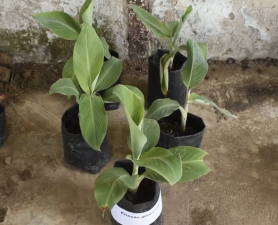
Nagaland University has carried out a detailed study on the genetic diversity of Musa sikkimensis, a wild banana species native to the Eastern Himalayas and Northeast India. The research marks its value as a genetic reservoir for disease resistance, stress tolerance and climate adaptability. It also underlines the need to conserve endangered banana germplasm for future crop improvement, food security and sustainable agriculture.
About Musa sikkimensis
- Musa sikkimensis is commonly known as Darjeeling banana or Sikkim banana.
- It is a wild-seeded banana species and is not widely grown for edible fruit.
- Its importance lies in its genetic traits, which can support banana breeding programmes.
- These traits are useful for developing varieties that can withstand climate stress and plant diseases.
Key Findings of the Study
- The study examined landraces of Musa sikkimensis in Nagaland.
- Researchers found strong adaptive potential across different environmental conditions.
- Several previously unclassified genotypes were identified and documented.
- The findings support the use of wild banana resources in climate-resilient agriculture.
Conservation Significance
- Nagaland lies within the Indo-Burma biodiversity hotspot and has rich banana diversity.
- Wild genotypes face threats from deforestation, environmental pressure and human activity.
- Farmers are increasingly shifting towards hybrid and tissue-culture banana varieties.
- This shift may lead to the loss of traditional and wild banana genotypes.
Banana Biodiversity Corridor
- Nagaland University has established a Banana Biodiversity Corridor at its Department of Horticulture.
- The corridor works as a living field gene bank.
- It supports in situ and ex situ conservation, genetic research and student training.
- The initiative aims to protect banana diversity and strengthen future agricultural development.