
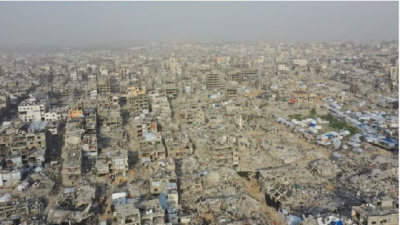
A magnitude 4.3 earthquake struck Tajikistan on Saturday at a shallow depth of 10 km. The tremor was recorded at 06:19:19 IST, with the epicentre located at latitude 36.932 N and longitude 71.515 E. Shallow earthquakes are often more damaging because seismic waves reach the surface with greater intensity.
Earthquake Details
- The earthquake measured 4.3 on the Richter scale.
- It occurred in Tajikistan at a depth of 10 km.
- Shallow depth increases the possibility of stronger surface shaking.
- Aftershocks are more likely in shallow seismic events.
Why Shallow Earthquakes Matter
Earthquakes are classified by depth into shallow, intermediate and deep zones. Shallow earthquakes occur between 0 and 70 km below the surface. They are generally more dangerous than deeper quakes because the energy has less distance to travel. This can lead to greater structural damage, stronger ground motion and higher risk to life and property.
Tajikistan’s Seismic and Environmental Risk
Tajikistan lies in a mountainous and geologically active region. It is vulnerable to earthquakes, landslides, floods, avalanches and mudslides. Its terrain, glacier-fed river basins and fragile mountain ecosystems make disaster management difficult. Climate change is also worsening these risks by increasing glacier loss and weakening water and transport systems.
Disaster Preparedness and Infrastructure Concerns
- Tajikistan’s roads and bridges are often affected by landslides and floods.
- Repeated natural hazards have contributed to infrastructure deterioration.
- Resilient construction requires hazard data and climate scenarios.
- Local knowledge is important in planning safer infrastructure.