
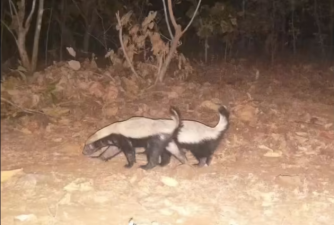
The elusive honey badger, locally known as qabar bijju, has been confirmed inside Kheoni Wildlife Sanctuary in Madhya Pradesh after a pair was recorded on CCTV cameras deep within the forest. The sighting is because the species is shy, nocturnal and rarely observed in the wild. It also reflects the improving ecological condition of the sanctuary, which is emerging as an important wildlife corridor.
About the Honey Badger
Honey badger, or ratel, is a small but highly resilient omnivorous mammal. It is known for its dense hide, strong build and fearless behaviour. It can defend itself against much larger predators such as tigers and leopards. The species has a distinctive white-to-grey band running from head to tail. It is mostly solitary and active at night.
Legal Protection in India
Honey badger is classified as Least Concern globally by the IUCN. However, in India it enjoys the highest level of legal protection under Schedule I of the Wildlife (Protection) Act, 1972. This places it in the same legal category as species such as tiger and elephant. Such protection helps prevent hunting and illegal trade.
Ecological Significance of Kheoni
The sighting marks the recovery of Kheoni Wildlife Sanctuary. The area has seen rising numbers of tigers and leopards in recent years, suggesting a stronger food chain and healthier habitat. Improved habitat management and strict anti-poaching measures have supported this change. The sanctuary now supports species such as spotted deer, sambar and wild boar.
Conservation Importance
Kheoni has become a key conservation zone in Madhya Pradesh. The presence of a rare and elusive species like the honey badger indicates better forest security and biodiversity health. It also shows the value of camera trapping in monitoring wildlife and assessing habitat recovery.
Last Modified: April 25, 2026