
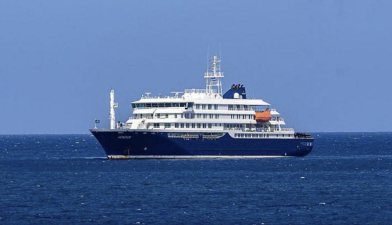
The World Health Organization (WHO) and global health agencies are monitoring a multi-country hantavirus outbreak linked to the Dutch-flagged expedition vessel MV Hondius. Initiated in April 2026 and confirmed in early May 2026, the outbreak marked the first documented occurrence of a hantavirus cluster within a commercial cruise ship environment. Driven by the highly virulent Andes virus strain, the event resulted in three fatalities and 11 total cases, including confirmed, probable, and suspected infections. The vessel underwent emergency medical evacuations and passenger disembarkation in the Canary Islands before returning to the Netherlands for decontamination, triggering international contact tracing across more than 20 countries.
Chronology and Epidemiological Spread
Point of Origin and Itinerary
The MV Hondius departed from the port of Ushuaia, Argentina, on April 1, 2026, for a South Atlantic cruise carrying 147 passengers and crew members from 23 nationalities. The route included stops at Antarctica, South Georgia Island, Tristan da Cunha, Saint Helena, and Ascension Island.
Index Case and Fatality Progression
- The Index Patient: A 70-year-old Dutch ornithologist developed initial febrile and gastrointestinal symptoms on April 6, 2026, following recent travel through northern Patagonia, Argentina. The patient developed acute respiratory distress and died onboard on April 11, 2026.
- Secondary Transmission: The patient’s 69-year-old widow disembarked at Saint Helena on April 24, 2026, and traveled to Johannesburg, South Africa. She collapsed at the airport and died on April 25, 2026, after contracting the virus through close contact.
- Subsequent Evacuations: A British passenger showing severe pneumonia symptoms was evacuated from Ascension Island to a South African intensive care unit, where Polymerase Chain Reaction (PCR) testing confirmed the infection. A ship guide was later medically evacuated to the Netherlands.
Global Containment and Isolation
The vessel was diverted to the Port of Granadilla in Tenerife, Canary Islands, where international health teams evacuated the remaining passengers. Disboarded individuals were placed under a mandatory 42-day quarantine protocol monitored by domestic health agencies across Europe, North America, and Australia. The ship returned to Rotterdam on May 18, 2026, under strict isolation with only 25 crew members onboard.
Pathogen Profile: The Andes Virus
Virological Classification
The specific pathogen isolated from the MV Hondius cluster is the Andes virus (ANDV). It belongs to the genus Orthohantavirus, within the family Hantaviridae and order Bunyavirales. It is an enveloped, single-stranded, negative-sense RNA virus.
Transmission Dynamics
Unlike old-world hantaviruses found in Europe and Asia, the Andes virus is endemic to the temperate rainforests and mountainous regions of southern Argentina and Chile.
| Transmission Mode | Environmental Mechanism / Criteria |
| Primary Zoonotic Vector | Inhalation of aerosolized viral particles from the dried feces, urine, or saliva of infected long-tailed pygmy rice rats (Oligoryzomys longicaudatus). |
| Human-to-Human Spread | Direct physical contact or prolonged exposure to respiratory droplets and bodily fluids in confined spaces. The Andes virus is unique as the only hantavirus strain capable of person-to-person transmission. |
Clinical Manifestations
The virus causes Hantavirus Pulmonary Syndrome (HPS), a highly fatal respiratory disease. The incubation period spans from 1 to 6 weeks, developing through two distinct phases:
- Prodromal Phase: Characterized by non-specific, flu-like symptoms including high fever, severe myalgia (back and thigh pain), headache, and gastrointestinal issues like vomiting and diarrhea.
- Cardiopulmonary Phase: Sudden onset of non-cardiogenic pulmonary edema, coughing, and rapid respiratory deterioration. This stage progresses to acute respiratory distress syndrome (ARDS), severe hypotension, and cardiogenic shock. The Case Fatality Rate (CFR) for HPS averages between 35% and 40%.
Clinical Interventions and Maritime Safety Protocols
Medical Management Standards
There are currently no approved targeted antiviral therapies or vaccines available for Hantavirus Pulmonary Syndrome. Clinical management relies entirely on early supportive care:
- Intensive Care Support: Immediate transfer to an ICU to manage respiratory failure using mechanical ventilation.
- Extracorporeal Membrane Oxygenation (ECMO): Continuous extracorporeal blood oxygenation is used in severe cases to support the heart and lungs when mechanical ventilation fails.
- Fluid Regulation: Careful monitoring of fluid balances to avoid worsening pulmonary edema while maintaining sufficient blood pressure.
International Health Regulations (IHR 2005)
The event triggered a coordinated international response under the framework of the International Health Regulations (2005). The multi-jurisdictional response involved the National IHR Focal Points of Argentina, Cabo Verde, Chile, France, Germany, South Africa, Spain, the United Kingdom, and the United States to manage cross-border contact tracing and flight cabin exposure assessments.
IASPOINT Booster Facts for UPSC
- Andes Virus vs. Sin Nombre Virus: Both cause Hantavirus Pulmonary Syndrome (HPS) in the Americas. However, the Sin Nombre virus (endemic to North America and vectored by the deer mouse) spreads strictly from rodent to human, whereas the South American Andes virus can spread between humans.
- Hantavirus Renal Syndrome (HFRS): Old-world hantaviruses found across Europe and Asia (such as the Hantaan and Puumala viruses) do not cause HPS. Instead, they cause Hemorrhagic Fever with Renal Syndrome (HFRS), which primarily targets the kidneys rather than the respiratory tract.
- The International Health Regulations (2005): A legally binding instrument of international law framework involving 196 countries, including all WHO member states. It requires countries to report specific public health events and core capacity crises to prevent the international spread of diseases.
- Zoonotic Spillover: The process by which a pathogen normally restricted to an animal reservoir shifts and establishes itself in a human host population. Enclosed, climate-controlled environments like cruise ships and aircraft cabins accelerate secondary human-to-human transmission following an initial spillover event.