
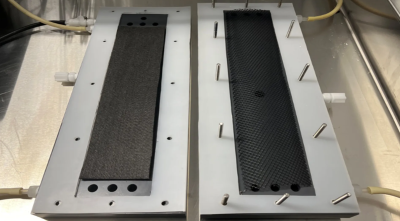
Scientists at Pennsylvania State University have developed a zero-gap microbial electrosynthesis reactor that converts carbon dioxide into methane with a coulombic efficiency exceeding 95 percent. Led by Bruce Logan, Director of the Institute of Energy and the Environment, the team engineered a bioelectrochemical system that merges water electrolysis with biological methanation. The technology addresses long-term renewable energy storage by transforming carbon dioxide into a transportable, carbon-neutral hydrocarbon fuel. The system can scale up without losing its processing capabilities, providing a sustainable pathway to recycle industrial emissions directly into existing natural gas infrastructure.
Architectural Design and Core Mechanisms
The system departs from traditional microbial electrosynthesis frameworks by changing the spatial relationship between the components.
The Zero-Gap Configuration
- Structural Blueprint: The cell places a thin cation exchange membrane directly between the anode and cathode.
- Ohmic Resistance Mitigation: Eliminating the physical gap between the electrodes cuts down internal electrical resistance. This allows fast electron transfer and protects against energy dissipation as heat.
- Surface Area Expansion: The configuration enables a tenfold increase in the active electrode surface area and extends the fluid flow path to nearly one foot (11.81 inches).
Hydrogen-Mediated Transformation
Instead of forcing methanogenic microorganisms to extract electrons directly from a bare electrode, the reactor uses a two-step localized sequence:
- Electrochemical Water Splitting: Renewable electricity powers the anode and cathode to split water molecules, generating hydrogen gas in-situ.
- Biological Methanation: Biocompatible biofilms dominated by hydrogenotrophic microbes reside directly on the cathode surface. These specialized methanogens immediately consume the fresh hydrogen to reduce carbon dioxide into methane gas (CH4).
- Kinetics Acceleration: Placing the microbes near the hydrogen source reduces diffusion delays, allowing high current densities and accelerated synthesis rates.
Performance Metrics and Operating Parameters
Laboratory trials demonstrated stable performance under standardized environmental conditions.
| Operating Parameter | Performance Metric Value | Operational Significance |
| Coulombic Efficiency | Greater than 95% | Almost all input electrons go directly to methane production rather than unwanted side reactions. |
| Overall Energy Efficiency | 45% to 47% | Represents one of the highest values recorded for biological carbon-to-fuel conversion under standard conditions. |
| Volumetric Productivity | Up to 6.9 Litres of CH4 per litre of reactor volume daily | High throughput baseline necessary for prospective industrial applications. |
| Optimal Operating Temperature | 30° Celsius (86° Fahrenheit) | Allows stable microbial metabolic activity without high external heating inputs. |
| Flow Management | Multiple trapezoidal inlet/outlet ports | Ensures uniform distribution of fluids and gases, preventing localized stress on biological communities. |
Environmental and Infrastructure Compatibility
The generation of synthetic methane presents structural advantages for global decarbonization strategies.
Carbon-Neutral Fuel Loop
The reactor captures industrial or atmospheric carbon dioxide to use as raw feedstock. When the resulting methane burns for energy, it returns that same carbon to the environment, making the entire cycle carbon-neutral.
Long-Duration Energy Storage
Grid operators face challenges storing excess solar or wind electricity during peak production periods. Batteries handle short-term storage, but chemical synthesis provides a seasonal alternative. This technology stores surplus green electricity within stable chemical bonds.
Infrastructure Reusability
Unlike hydrogen gas, which requires specialized cryogenic storage and causes pipeline embrittlement, biomethane matches fossil-derived natural gas. It fits into existing global distribution grids, storage caverns, and residential supply lines without modification.
IASPOINT Booster Facts for UPSC
- Microbial Electrosynthesis (MES): A technology where electricity is supplied to micro-organisms to convert greenhouse gases into valuable organic compounds and chemical fuels.
- Coulombic Efficiency defined: The ratio of the total charge used in a specific reaction (like methane generation) to the total electrical charge passed through the system.
- Methanobacterium Dominance: Genetic sequencing of the cathode biofilm reveals that Methanobacterium species comprise over 50% of the microbial community, showing minimal spatial changes along the extended flow path.
- Comparison with Sabatier Process: The traditional chemical method to convert carbon dioxide and hydrogen to methane (the Sabatier reaction) requires high operational temperatures (300°C to 400°C) and pressure, whereas MES functions at ambient conditions (30°C).
- United Nations SDG Alignment: This technology supports Sustainable Development Goal 7 (Affordable and Clean Energy), Goal 12 (Responsible Consumption and Production), and Goal 13 (Climate Action).