
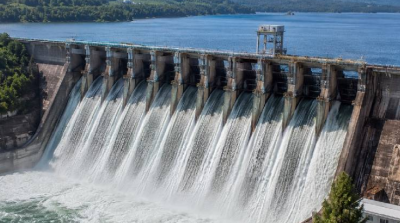
India manages the world’s third-largest large dam network, comprising 6,628 specified dams that drive irrigation, hydropower generation, flood control, and domestic water security. However, a substantial portion of this infrastructure is aging rapidly, with approximately 26% of these structures currently exceeding 50 years of age. To address vulnerability and structural deterioration, the Ministry of Jal Shakti has implemented systematic interventions through the Dam Rehabilitation and Improvement Project (DRIP) and enforced the statutory mandates of the Dam Safety Act, 2021. These initiatives collectively shift India’s dam management paradigm from reactive maintenance to proactive, risk-based institutional safety.
Institutional Framework under Dam Safety Act, 2021
The Dam Safety Act, 2021, provides a comprehensive legal framework to ensure the safe functioning of specified dams across the country. It establishes a dual-tier institutional mechanism at both federal and provincial levels to enforce safety standards.
National Level Bodies
- National Committee on Dam Safety (NCDS): This body is chaired by the Chairman of the Central Water Commission (CWC). It formulates safety policies, recommends necessary regulations, and devises standardized safety protocols.
- National Dam Safety Authority (NDSA): Operating as a regulatory body, the NDSA implements NCDS policies, resolves inter-state disputes regarding dam safety, and maintains a national database of large dams.
State Level Bodies
- State Committee on Dam Safety (SCDS): Every state government constitutes this committee to oversee safety works, review monitoring reports, and assess rehabilitation measures at the provincial level.
- State Dam Safety Organisation (SDSO): This entity is responsible for the routine inspection, structural evaluation, and enforcement of safety guidelines for dams located within state boundaries.
Mandates for Dam Owners and Operators
The legislation places direct accountability on dam owners, whether they are state utilities, central public sector undertakings (PSUs), or private entities.
Inspections and Risk Assessment
- Pre-Monsoon and Post-Monsoon Inspections: Dam owners must conduct thorough structural inspections twice every year to identify structural distress, seepage, or choking of spillways.
- Comprehensive Safety Evaluation: Independent panels of experts must conduct a detailed structural safety evaluation of every dam at regular intervals, specifically focusing on structures older than 10 years or those that have experienced seismic events.
Emergency Preparedness and Disaster Management
- Emergency Action Plans (EAPs): Operators must prepare and periodically update a comprehensive EAP for each dam. This document outlines evacuation routes, inundation maps, and communication protocols during sudden water releases or potential breaches.
- Inundation Mapping: Advanced hydrodynamic modeling is used to map downstream areas at risk of flooding during extreme weather events.
Dam Rehabilitation and Improvement Project (DRIP)
DRIP is a flagship initiative of the Ministry of Jal Shakti, financially and technically assisted by the World Bank and the Asian Infrastructure Investment Bank (AIIB). The program focuses on physical rehabilitation, modernization of instrumentation, and institutional strengthening.
Phases and Coverage of DRIP
| DRIP Phase | Timeline | Funding Agencies | Key Focus Areas |
| Phase I | 2012 – 2021 | World Bank | Rehabilitated 223 dam sites across 7 states; focused on structural stabilization and basic hydrological assessments. |
| Phase II & III | 2021 – 2031 | World Bank & AIIB | Targets 736 dams across 19 states; introduces advanced early warning systems and risk-based asset management. |
Key Technical Interventions under DRIP
- Structural Rehabilitation: Grouting of dam bodies, treatment of upstream faces to reduce seepage, repair of spillway gates, and strengthening of structural foundations.
- Hydro-Meteorological Modernization: Installation of automated weather stations, inflow forecasting systems, and real-time data acquisition networks to predict incoming floods.
- Sediment Management: Desiltation exercises and catchment area treatment to restore the dead storage capacity of reservoirs.
Key Digital Platforms for Dam Safety
India has deployed specialized digital tools to enable continuous structural monitoring and data-driven risk management.
DHARMA (Dam Health and Rehabilitation Monitoring Application)
DHARMA is a web-based asset management software that captures health data for all large dams. It assists dam owners in digitizing inspection reports, monitoring structural distress parameters, and tracking asset health over time.
SEAMS (Seismic Hazard Assessment System)
This platform provides site-specific seismic hazard assessments for dam locations. It helps engineers evaluate whether older dams can withstand ground motion intensities defined by updated seismic zone maps.
IASPOINT Booster Facts for UPSC
- Specified Dam Definition: Under the Dam Safety Act 2021, a specified dam is any dam with a height more than 15 meters, or a dam between 10 and 15 meters height that meets specific technical conditions like a reservoir capacity exceeding 1 million cubic meters.
- Mullaperiyar Dam Issue: Located in Kerala but operated by Tamil Nadu, this 126-year-old gravity dam is a primary driver behind the inter-state dispute provisions incorporated into the Dam Safety Act, giving the NDSA direct regulatory jurisdiction over such cross-border assets.
- International Commission on Large Dams (ICOLD): India is a prominent member of ICOLD, which sets global technical standards for dam engineering. The Central Water Commission acts as the Indian National Committee (INCOLD).
- Age Profile of Indian Dams: The majority of India’s large dams were constructed between 1970 and 1990. By 2050, over 4,400 large dams in India will be older than 50 years, increasing the risk of structural fatigue.
- Glacial Lake Outburst Floods (GLOFs): Recent updates to dam safety guidelines mandate that dams in the Himalayan region incorporate GLOF risks into their Emergency Action Plans, following structural failures like the Teesta-III dam breach in Sikkim.