
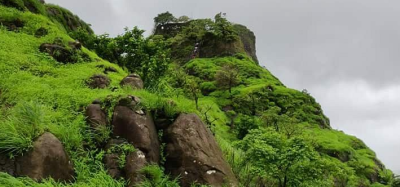
Over 60 hectares of private forest land located near the historic Karnala Fort in the Uran taluka of Raigad district, Maharashtra, have been deforested without securing the mandatory prior clearance from the Union Ministry of Environment, Forest and Climate Change. This extensive clearing violates the statutory provisions of the Forest (Conservation) Act, 1980. The diversion was officially sanctioned by the Panvel Sub-Divisional Officer in 2024, reversing a 2012 administrative decision where a predecessor had rejected an identical application for the same site. Forest authorities have flaggeed deep administrative flaws and are actively seeking legal guidance to challenge this unauthorized excavation, which directly threatens the fragile ecosystem of the adjacent Karnala Bird Sanctuary.
Regulatory Violations and Legal Framework
Forest Conservation Act provisions
The Forest (Conservation) Act, 1980 regulates the use of forest land for non-forest purposes across India. Section 2 of the Act explicitly specifies that no state government or local authority can de-reserve forest land, or direct its diversion for non-forest activities like infrastructure, commercial construction, or mining, without the explicit prior approval of the Central Government. This legal mandate applies uniformly to both government-notified forests and private lands that fall under the legal definition of a forest.
Application to Private Forest Lands
The scope of the Forest (Conservation) Act, 1980 extends to private properties that satisfy the physical parameters of a forest. Following landmark judicial interventions, any land recorded as a forest in government revenue records, or showing typical forest traits, cannot be cleared without central statutory clearances. Local revenue officers lack the independent jurisdiction to authorize large-scale tree felling or excavation on these lands.
Ecological Implications for Karnala Bird Sanctuary
Proximity to Eco-Sensitive Zone
The unauthorized land clearance and active soil excavation sit right next to the Karnala Bird Sanctuary. This protected area is enclosed by a designated Eco-Sensitive Zone extending up to an 8-kilometer radius. Eco-Sensitive Zones act as shock absorbers for protected areas, transitioning high-protection wildlife zones into cleaner buffer regions by strictly prohibiting polluting industries and major commercial construction.
Impact on Regional Biodiversity
The Karnala bird habitat supports approximately 147 resident and 37 migratory bird species, including rare avian fauna such as the Malabar whistling thrush, grey hornbill, and various woodpecker species. The deployment of heavy earth-moving machinery, destruction of canopy cover, and structural alterations to the hilly terrain cause immediate habitat fragmentation, noise pollution, and disruption of natural wildlife corridors.
Timeline of Administrative Actions
| Year | Administrative Authority | Status of Diversion Application | Legal Status |
| 2012 | Panvel Sub-Divisional Officer (Predecessor) | Rejected | Upheld the protection status under forest laws. |
| 2024 | Panvel Sub-Divisional Officer (Current) | Approved | Overturned the previous rejection without central assent. |
| 2026 | State Forest Department / Local Activists | Under Investigation | Flagged as an illegal clearance; appeals are being processed. |
IASPOINT Booster Facts for UPSC
- Karnala Bird Sanctuary Location: Situated in the Western Ghats bio-geographic zone within the Raigad district of Maharashtra, covering an area of around 12.11 square kilometers.
- Key Bird Species: Home to the oriental dwarf kingfisher, Indian pitta, and regional raptors like the crested serpent eagle.
- T.N. Godavarman Thirumulpad Case (1996): The Supreme Court ruling that expanded the word “forest” under the Forest (Conservation) Act, 1980 to include its dictionary meaning, irrespective of ownership or formal classification.
- Eco-Sensitive Zones (ESZ): Declared under Section 3 of the Environment (Protection) Act, 1986, rather than the Wildlife (Protection) Act, 1972.
- Uran Terrain: Characterized by coastal wetlands, mangroves, and secondary moist deciduous forest patches that are vital for local water tables.