
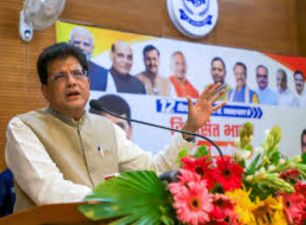
Union Commerce Minister Piyush Goyal highlighted that India’s Free Trade Agreements (FTAs) with developed economies aim to boost long-term growth by enhancing global trade, attracting investments, fostering innovation, creating jobs, and upgrading quality standards. The Trade and Economic Partnership Agreement (TEPA) with EFTA countries, including Switzerland, has committed USD 100 billion investment and the creation of one million jobs in India over 15 years. India’s engagement with developed countries leverages its young workforce and competitive costs alongside their capital and technology, facilitating integration into global value chains and innovation ecosystems. The government’s reforms, infrastructure development, and focus on renewable energy further strengthen India’s appeal as a global investment and manufacturing hub.
Core Pillars of India’s Strategic FTAs
India has shifted toward entering high-quality trade pacts with developed nations to secure stable investment flows and upgrade domestic manufacturing. This framework blends the capital, technology, and advanced innovation systems of developed economies with India’s competitive production costs and demographic dividend.
Direct Investment Pledges
New-generation FTAs integrate binding investment commitments. The Trade and Economic Partnership Agreement (TEPA) with the European Free Trade Association (EFTA) serves as the primary model for this mechanism, ensuring external financial commitments to domestic manufacturing.
Integration into Global Value Chains
Lowering tariff and non-tariff barriers allows domestic industries to source high-grade inputs and intermediate goods. This integration boosts the global competitiveness of local manufacturers, helping them transition from domestic assembly to high-value global supply networks.
Skill and Technology Transfer
Collaborative frameworks within these trade pacts encourage the setting up of joint research facilities, tech co-development, and standard harmonization in clean energy, pharmaceuticals, and digital infrastructure.
Key Agreements and Status
India has expanded its trade network to include major developed economies and economic blocs, protecting sensitive sectors like agriculture and dairy while seeking deep market access for services and industrial goods.
| Agreement | Partner Countries / Blocs | Current Status | Major Features |
| Trade and Economic Partnership Agreement (TEPA) | EFTA (Switzerland, Norway, Iceland, Liechtenstein) | Effective from October 1, 2025 | USD 100 billion investment commitment; 1 million jobs over 15 years; 99.6% tariff lines covered by EFTA. |
| Comprehensive Economic and Trade Agreement (CETA) | United Kingdom | Signed in July 2025 | Targets doubling bilateral trade by 2030; opens avenues for textiles, leather, and gems. |
| India-EU FTA | European Union | Concluded in January 2026 | Broad-based deal addressing market access, services mobility, and sustainable development standards. |
| India-Australia ECTA | Australia | Implemented in December 2022 | Zero-duty access for 96% of Indian exports; provides post-study work visas for Indian students. |
| India-New Zealand FTA | New Zealand | Announced in December 2025 | Focused on structural cooperation, agricultural exceptions, and service sector pathways. |
| India-US Interim Agreement Framework | United States | Framework delivered in February 2026 | Works toward reducing non-tariff barriers and enhancing supply chain integration. |
Structural Protections for Domestic Industry
India applies a balanced negotiation strategy to shield sensitive domestic sectors while pursuing opening up in others.
Exclusion lists for Sensitive Sectors
To safeguard the livelihoods of domestic farmers and small-scale industries, primary agricultural products, dairy, soya, coal, and gold are routinely excluded from tariff concession lists.
Product-Specific Rules of Origin
Strict criteria prevent the illegal routing of goods from non-party countries through FTA partners. Traders must supply verified Certificates of Origin or use movement certificates to qualify for preferential duty rates.
Services Mobility and Mutual Recognition Agreements
India prioritizes Mode 4 services, which cover the temporary movement of natural persons. Agreements incorporate Mutual Recognition Agreements (MRAs) for professionals like nurses, architects, and chartered accountants to validate their qualifications abroad without repetitive certification.
Operational Challenges in FTA Utilization
While the trade network expands, domestic industries face structural roadblocks that limit the full realization of these pacts.
Low Utilization Rates
Reports indicate that only 20% to 30% of eligible Indian exports use FTA institutional benefits, compared to a 60% to 70% utilization rate by partner countries. Low Most Favoured Nation (MFN) tariffs in developed markets often make the cost of compliance higher than the potential tariff savings.
Rising Trade Deficits
Bilateral trade deficits with major partners have widened. High raw material duties relative to finished goods create inverted duty structures, making imports cheaper than locally processed items and pressuring the domestic manufacturing ecosystem.
Non-Tariff Barriers and Environmental Standards
New-generation pacts face compliance friction due to domestic policy interventions in partner states, such as the European Union’s Carbon Border Adjustment Mechanism (CBAM), labor regulations, and stringent sanitary and phytosanitary rules.
IASPOINT Booster Facts for UPSC
- TEPA Investment Split: Under the India-EFTA TEPA, the investment commitment is divided into two phases: USD 50 billion within the first 10 years of enforcement, and the remaining USD 50 billion in the subsequent 5 years.
- First Legally Binding Chapter: The TEPA is the first trade agreement where India accepted a dedicated, legally binding chapter on trade and sustainable development, focusing on environmental and labor standards.
- Global Diversity Ranking: According to the UNCTAD Trade and Development Report, India ranks 3rd among Global South economies in terms of trade partnership diversity.
- Rules of Origin Formats: Preferential origin verification under newer FTAs uses the EUR.1 movement certificate or origin declarations by approved exporters, removing traditional bureaucratic delays.
- Services Classification: India’s FTA negotiations focus heavily on Mode 1 (cross-border digital delivery) and Mode 4 (mobility of professionals), matching its competitive edge in IT and business services.