
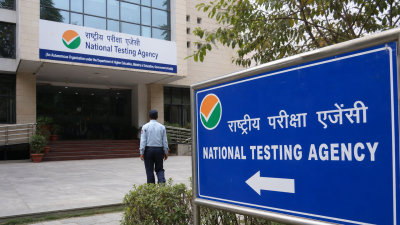
A parliamentary standing committee has criticised the National Testing Agency’s use of MCQs in CUET humanities and social sciences, questioned the “one-test-fits-all” model, and sought a time-bound reform roadmap including third‑party security audits and decentralised descriptive testing. The government has noted the committee’s observations and advised UGC and NTA accordingly.
What is the current issue?
CUET’s design and delivery face parliamentary scrutiny for pedagogical, equity and operational reasons. The committee argues MCQs favour rote recall and coaching; CUET’s uniform model may conflict with institutional mandates on diversity; and repeated technical and security failures have eroded trust in the NTA.
Why it matters
- Governance: Centralised examinations shape access to public higher education and test public agencies’ capacity to run large-scale assessments.
- Equity: Assessment format and admission design affect socio-economic and regional representation in universities with statutory diversity objectives.
- Pedagogy: Assessment signals what learning is valued; misaligned tests can distort teaching and student effort.
- Credibility: Glitches, leaks and security lapses undermine meritocracy and public confidence in national examinations.
Genesis and objectives of CUET
CUET was introduced in the 2022–23 academic session to reduce multiplicity of entrance tests, ease student burden across disparate school boards, and provide a common admission platform. By 2025 it became India’s second-largest examination with over 1.35 million applicants.
Parliamentary panel’s observations
- MCQ format: Promotes memorisation over analysis in humanities and social sciences; risks disadvantaging non‑coached students.
- One-test-fits-all: Limits universities with specific legislative mandates from designing admissions that preserve socio-economic and regional diversity.
- Operational failures: Persistent glitches, security flaws, operational errors and paper leaks in NTA‑conducted exams.
- Quality and alignment: Question quality and overall test design need review to align with NEP 2020’s emphasis on higher‑order thinking.
- Reform demand: Time‑bound roadmap from NTA including third‑party security audits and decentralised descriptive testing for humanities.
Pedagogical critique: MCQ vs descriptive assessment for humanities
| Dimension | MCQ | Descriptive / Essay / Project |
|---|---|---|
| Skills assessed | Factual recall, recognition, time‑bound decision making | Analytical reasoning, argumentation, synthesis, expression |
| Preparation bias | Favour coaching and test‑taking strategies | Favour subject knowledge, writing and critical thinking |
| Scoring objectivity | High inter‑marker objectivity; easier automation | Requires rubric, trained evaluators; moderate subjectivity |
| Logistics & scalability | Easier at scale with CBT infrastructure | Challenging at scale; needs decentralisation or hybrid models |
| Alignment with NEP 2020 | Limited; emphasises recall | Better; assesses higher‑order cognitive skills |
“One-test-fits-all” and effects on institutional diversity
A uniform CUET may constrain universities that have statutory or policy mandates to ensure regional, linguistic or socio‑economic representation. Institutions such as JNU rely on admission criteria and processes designed to meet specific equity goals. A central test without university‑level components reduces scope for contextual assessment and affirmative weighting.
- Risk: Homogenised selection may under‑represent marginal groups and regional specialisations.
- Institutional autonomy: Requires calibrated flexibility—universities should retain ability to add discipline‑specific or mission‑driven assessment components.
- Policy options: Allow university‑specific modules, weighted composite scores, or decentralised descriptive components for relevant disciplines.
Operational and credibility issues at NTA
- Observed weaknesses: Recurrent CBT glitches, security lapses, procedural errors and occasional paper leaks.
- Implications: Disruption to examinations, litigation, reputational cost, and loss of stakeholder confidence.
- Institutional remedies: Strengthen contracts, standard operating procedures, accountability frameworks and coordination with state centres and universities.
Alignment with NEP 2020
NEP 2020 emphasises multidisciplinary education, critical thinking, formative assessment and reduced emphasis on rote learning. Assessment design must therefore shift from single‑dimension recall tests toward varied instruments that evaluate analysis, creativity and applied knowledge. CUET’s structure should be reviewed to reflect these pedagogic priorities while maintaining fairness and scalability.
Demanded reforms and a practical roadmap
| Timeline | Key actions |
|---|---|
| Immediate (0–6 months) | Commission third‑party security audit; publish Action Taken response; pilot decentralised descriptive papers for select humanities subjects; strengthen grievance redressal and incident reporting. |
| Short term (6–18 months) | Implement robust CBT redundancy and monitoring; develop validated question banks and psychometric protocols; allow university‑level additional components or weightings; train evaluators for descriptive assessment. |
| Medium term (18–36 months) | Scale decentralised descriptive or hybrid testing models; legislate or clarify NTA mandate and university autonomy under UGC/HEI regulations; institutionalise periodic external audits. |
| Long term (36+ months) | Integrate assessment reforms with NEP implementation—multimodal admissions, continuous assessment credits, and technology for secure, distributed evaluation. |
Operational design principles for reform
- Validity: Align test formats to the competencies each discipline requires.
- Equity: Reduce coaching bias through diverse assessment modes and affirmative weighting where necessary.
- Integrity: Independent security audits, encryption standards, and chain‑of‑custody protocols.
- Autonomy with accountability: Permit university‑specific admissions components while auditing compliance with fairness norms.
- Scalability: Use hybrid models—central MCQs where appropriate; decentralised descriptive assessments for disciplines that require them.
Implementation risks and mitigation
- Risk: Descriptive testing at scale may increase cost and subjectivity. Mitigation: Use standardised rubrics, digital answer scripts and cross‑marking panels.
- Risk: Fragmentation of admissions leading to administrative load. Mitigation: Clear protocols, phased roll‑out and IT integration with university systems.
- Risk: Continued security threats. Mitigation: Independent audits, criminal accountability for breaches, and enhanced vendor oversight.
Stakeholders and roles
| Stakeholder | Role |
|---|---|
| NTA | Test administration, technological backbone, implement audit recommendations. |
| UGC / MHRD | Policy direction, regulatory clarification on university autonomy, oversight of reforms. |
| Universities | Design discipline‑specific assessment components, maintain statutory diversity goals. |
| Third‑party auditors | Security, process and psychometric audits; certification of test integrity. |
| Civil society & candidates | Stakeholder feedback, transparency demands and legal accountability. |
Model Questions
- Critically examine the parliamentary panel’s concerns regarding the design and implementation of CUET and suggest reforms necessary to align it with NEP 2020 objectives. [GS-II: Governance] Answer Hint: Summarise
- panel’s critique of MCQs, one‑test limitations and NTA operational failures. Propose reforms: decentralised descriptive testing for humanities, third‑party security audits, improved question quality and psychometric validation, phased pilots, and regulatory clarity to align CUET with NEP’s emphasis on critical thinking and multidisciplinary assessment. Analyse how a ‘one‑test‑fits‑all’ CUET model may affect socio‑economic and regional diversity in higher education, and recommend policy interventions. [GS-II: Social Justice] Answer Hint: Explain
- homogenisation risks to universities with diversity mandates (eg. regional/linguistic representation). Recommend interventions: allow university‑specific admission modules, weighted composite scores, targeted outreach and reserved criteria, decentralised assessments and stronger institutional autonomy with accountability safeguards. Evaluate the pedagogical implications of using MCQ formats for humanities and social science examinations and propose alternative assessment methods that foster critical analysis. [GS-I: Indian Society] Answer Hint: State
- that MCQs primarily test recall and advantage coaching; describe limits for deep learning. Propose alternatives: descriptive essays, source‑based questions, case studies, project portfolios, oral vivas and hybrid assessments with standardised rubrics to assess analysis, synthesis and subjective reasoning. Identify institutional and administrative challenges faced by the NTA in conducting national examinations like CUET and outline a time‑bound roadmap to restore credibility and ensure fair processes. [GS-II: Governance] Answer Hint: List challenges—technical glitches, security lapses, operational errors, credibility loss. Roadmap: immediate third‑party security audits and incident reporting, short‑term CBT and vendor reforms, medium‑term decentralised testing pilots and evaluator training, long‑term statutory clarity, periodic audits and transparent grievance redressal.