
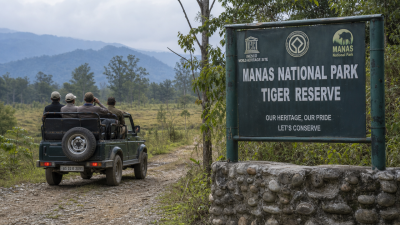
Manas National Park recorded zero rhino and tiger poaching cases for three consecutive years, announced 16 June 2026.
Park profile
- Location & area: Western Assam at the foothills of the Eastern Himalayas; c. 850 sq km across Baksa and Chirang districts.
- Designation: National Park and Tiger Reserve; UNESCO World Heritage Site.
- Key fauna: One‑horned rhinoceros (Rhinoceros unicornis), Royal Bengal tiger (Panthera tigris tigris), Asian elephant, wild water buffalo.
Conservation measures linked to zero poaching
- Anti‑poaching operations: Intensive patrolling and intelligence‑led enforcement.
- Human resources & technology: Increased deployment of forest personnel and modern surveillance technologies.
- Community engagement: Local stakeholder participation in monitoring and reporting networks.
- Species management: Indian Rhino Vision facilitated rhino translocations from Kaziranga and Pobitora beginning 2008; sustained habitat protection and increased rhino births recorded 2012–2022.
Data & operational details
- Poaching record: Zero recorded rhino and tiger poaching incidents for three consecutive years (as of 16 June 2026).
- Rhino population trend: Assam rhino numbers up ~170% since the 1980s (from ~1,500 to over 4,000).
- Tourism status: Manas closed to visitors from 25 June 2026 until further notice for the monsoon season.
IASPOINT Booster Facts
- Legal framework: National Parks and wildlife in India are protected under the Wildlife Protection Act, 1972 and tiger reserves operate under Project Tiger/NTCA guidelines.
- Biodiversity context: Manas lies within the Eastern Himalaya biodiversity hotspot and is crucial for landscape‑level conservation connectivity.