
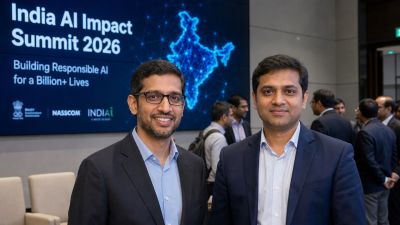
India’s Sarvam AI has entered global AI policy conversations after recognition by industry leaders and participation in G‑7 discussions. The Bengaluru startup’s language‑centric foundational models, recent 30B and 105B parameter releases and multimodal tools position India as a practical contributor to debates on inclusive, sovereign and accountable AI.
Current issue and why it matters
- What is current: Sarvam AI, founded in Bengaluru by Vivek Raghavan and Pratyush Kumar (Aug 2023), has released large language and multimodal models and joined high‑level international discussions.
- Why it matters: Indian language and script support affects digital inclusion, national data governance, economic competitiveness and India’s voice in setting global AI norms.
Indigenous AI: technical and policy rationale
- Linguistic gap: Global models often under‑perform on Indic scripts and low‑resource languages. India‑trained models improve accuracy, usability and user cost for large segments of the population.
- Sovereign capability: Local development reduces dependence on foreign models, preserves control over sensitive data and enables tailoring to national policy and law.
- Affordability and access: Smaller, language‑aware models lower compute and latency costs for regional deployments, widening access across urban and rural India.
Sarvam AI — empirical example
- Founders and mission: Vivek Raghavan and Pratyush Kumar aim to address model inefficiencies on Indian scripts and build India‑centric foundational models.
- Recent outputs: Announced 30‑billion and 105‑billion parameter language models; released text‑to‑speech, speech‑to‑text and vision models at the India AI Impact Summit 2026.
- Global recognition: Cited by global executives including Google CEO Sundar Pichai; co‑founder attended a G‑7 leaders’ lunch with major AI CEOs.
Significance for governance, economy, society and security
- Digital inclusion: Models for regional languages improve service delivery in health, education, agri extension and public grievance redressal.
- Economic opportunity: Domestic model development creates markets for Indian startups, IP generation and exportable AI services.
- National security: Sovereign models reduce operational dependence on foreign providers for critical systems and preserve control over sensitive datasets.
- Cultural preservation: Training on local corpora aids preservation and correct contextual handling of languages, idioms and content norms.
Challenges in scaling indigenous foundational AI
| Challenge | Implication | Mitigation |
|---|---|---|
| Talent | Shortage of research engineers and ML safety experts | Funded PhD/ fellowship schemes; industry‑academic recruitment; returnee incentives |
| Funding | High capex for research, datasets and compute | Public‑private funds, sovereign technology investments, concessional grants |
| Compute infrastructure | Energy, cooling and specialised hardware needs | Cloud credits, national compute hubs, support for chip and data‑centre ecosystem |
| Data availability & quality | Insufficient annotated corpora across languages; risk of bias | Public data commons, metadata standards, incentivised data curation |
| Intellectual property & standards | Risk of international IP conflicts; lack of interoperable standards | Clear IP policies, open standards participation, appropriate licensing |
| Regulation & market confidence | Over‑ or under‑regulation can stifle innovation or harm users | Agile rule‑making, regulatory sandboxes, sectoral guidance |
Ethical and governance dilemmas
- Algorithmic bias: Training data gaps across caste, region, gender and dialect produce skewed outputs. Mitigation requires diverse datasets and bias auditing.
- Data privacy: Large models consume personal and community data; robust privacy rules, purpose limitation and data minimisation are necessary.
- Accountability and liability: Define responsibility for harms from automated decisions; sectoral accountability frameworks are required (health, justice, finance).
- Access equity: Avoid uneven diffusion where urban elites capture benefits while marginalised groups are excluded.
- Transparency: Model documentation (data sheets, model cards), explainability and independent audits improve trust and oversight.
Pathways for India to influence global AI policy
- Multilateral engagement: Active presence in G‑7, G‑20, UN fora, UNESCO processes and technical groups to shape norms on safety, privacy and multilingual AI.
- Technical diplomacy: Use bilateral talks and diaspora networks to form coalitions for standards that respect plural legal systems and linguistic inclusion.
- Standard setting via demonstration: Export best practices from projects (e.g., language models, public datasets, privacy‑preserving techniques) as templates for other emerging economies.
- Capacity building: Offer training, open datasets and model toolkits to low‑ and middle‑income countries to align on human‑centric AI norms.
- Institutional anchors: Strengthen national centres of excellence, coordinate MeitY, NITI Aayog and relevant ministries for unified policy positions.
Operational measures for policy and industry
- Public datasets and standards: Create curated, annotated multilingual corpora with privacy safeguards and standard metadata.
- Compute and funding: Establish national compute hubs, offer cloud credits and create a dedicated AI mission fund for foundational model R&D.
- Regulation and sandboxes: Implement sectoral regulatory guidance and sandboxes for testing safety, fairness and accountability before wide deployment.
- PPP and capacity building: Encourage startups and academia partnerships; fund fellowships and specialised training for AI safety and ethics.
- Exportable governance models: Document India‑specific governance practises—language inclusion, public data commons—to inform international standards.
Risks and trade‑offs to manage
- Security vs openness: Tight control raises costs and slows innovation; excessive openness can leak sensitive capabilities. Policy must balance these tensions.
- National focus vs global interoperability: India‑centric models should adopt interoperable APIs and standards to remain competitive in global markets.
- Rapid growth vs ethical safeguards: Scale must be paired with governance: model cards, red‑team testing, continuous monitoring and legal clarity on liability.
Key institutions and initiatives to engage
- National: Ministry of Electronics & IT, NITI Aayog, national research institutes, public dataset initiatives and India AI Impact Summit platform.
- International: G‑7, G‑20, UN bodies, UNESCO and technical networks such as the Global Partnership on AI and standards organisations (ISO/IEC).
- Industry and civil society: Startups (Sarvam AI example), large tech firms, academic labs and NGOs for audits, public interest use‑cases and capacity building.
Model Questions
1. Examine how India’s rising presence in global AI debates, illustrated by firms like Sarvam AI, can enable it to shape international AI governance. [GS-II: International Relations]
India can shape global AI governance by offering technical contributions (language‑aware models), normative positions (human‑centric, democratic AI) and coalition building in G‑7/G‑20/UN fora. Practical steps: present interoperable standards, share public datasets, provide capacity‑building to other developing countries, and coordinate national ministries and industry to offer united policy proposals that balance innovation, privacy and safety in multilateral negotiations.
2. Assess the importance of indigenous foundational AI models for India’s digital sovereignty and inclusive growth. What obstacles must be overcome? [GS-III: Science & Technology]
Indigenous models enable language inclusion, lower deployment cost, protect sensitive data and create domestic IP and jobs. Obstacles include scarcity of specialised talent, limited funding for large R&D, insufficient high‑performance compute, and lack of comprehensive multilingual annotated datasets. Addressing these requires public funding, national compute facilities, incentives for talent repatriation, and curated public data commons with privacy safeguards.
3. Critically analyse ethical and governance dilemmas posed by rapid AI advances in India, especially regarding data, bias and equitable access. [GS-IV: Ethics, Integrity and Aptitude]
Rapid AI growth risks entrenched biases from unrepresentative training data, erosion of privacy, unequal access across regions and unclear accountability for harms. Governance demands enforceable privacy rules, model documentation, independent audits, inclusive dataset creation, and sectoral accountability norms. Ethical policy must ensure participatory rule‑making, transparency measures and remedies for affected individuals to uphold fairness and public trust.
4. Evaluate the claim that “AI must be developed within India” in the contexts of national security, economic development and cultural preservation. [GS-III: Internal & External Security]
Domestic AI development strengthens security by keeping sensitive models and data under national oversight, supports economic growth via jobs, startups and exportable IP, and preserves languages and cultural context through trained corpora. Limitations include resource intensity, need for global collaboration on standards and potential isolation if interoperability is neglected. Policy should combine domestic capacity building with international cooperation.
Last Modified: June 23, 2026