
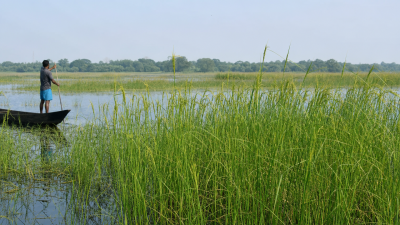
Borjuli wetland in Sonitpur, Assam was notified as a Biodiversity Heritage Site by the National Biodiversity Authority on 2–3 July 2026 for in‑situ conservation of wild rice genetic resources.
The Site and Species
- Location: Borjuli wetland, Sonitpur district, Assam (Brahmaputra valley floodplain).
- Key taxon: Oryza rufipogon — wild rice, direct progenitor of cultivated Oryza sativa.
- Adaptive traits: Natural resistance to pests and diseases; tolerance to flooding and salinity.
Conservation Project & Administration
- Project: “In-situ Conservation and Management of Wild Rice (Oryza rufipogon) in Sonitpur District” — operational since 2022.
- Funding: National Rainfed Area Authority (NRAA), Ministry of Agriculture and Farmers Welfare.
- Executing agencies: ICAR‑National Bureau of Plant Genetic Resources (ICAR‑NBPGR) and Assam State Biodiversity Board.
- BHS notification: Declared by the National Biodiversity Authority on 2–3 July 2026.
IASPOINT Booster Facts
- Breeding value: O. rufipogon provides alleles for flood, salinity and pest/disease tolerance used in rice improvement.
- Conservation approach: In‑situ conservation preserves wild populations and their ecological interactions; complements ex‑situ gene banks (ICAR‑NBPGR).
- Legal framework: National Biodiversity Authority is a statutory body under the Biological Diversity Act, 2002; State Biodiversity Boards participate in BHS management.
- Geographic relevance: Sonitpur’s floodplain ecosystems are reservoirs of rainfed and flood‑tolerant rice germplasm.