
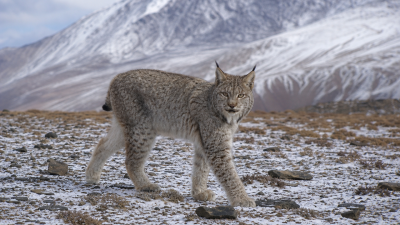
A Eurasian lynx (Lynx lynx) was photographed by a camera trap on the Tso Lhamo plateau, Sikkim (5,250 m / 17,224 ft) in January 2026; reported on 7 July 2026 as the first confirmed record for Sikkim and second for the Eastern Himalayas.
Photographic Record
- Date & Location: January 2026, Tso Lhamo plateau, Mangan district, Sikkim; altitude 5,250 m (17,224 ft).
- Regional context: Second confirmed photographic record for the Eastern Himalayas after Arunachal Pradesh (2025).
- Method: Camera-trap capture during a long-term snow leopard and rangeland monitoring programme.
Species Profile
- Scientific name: Lynx lynx.
- Morphology: Medium-sized cat with ear tufts and a short tail; adapted to cold, high-altitude environments.
- Conservation status: IUCN Red List — Least Concern (global assessment).
Habitat and Co-occurring Species
- Ecosystem: High-altitude cold desert rangeland of the Tso Lhamo plateau.
- Sympatric fauna: Snow leopard, Pallas’s cat, Tibetan wolf, Tibetan gazelle, Tibetan argali, blue sheep, southern kiang.
Monitoring and Evidence
- Programme origins: Monitoring initiated after the 2022 snow leopard population assessment.
- Historical sightings: Local Drokpa herders reported smaller short‑tailed wild cats; physical remains recovered in 2004.
- Research priorities: Population status, habitat use, prey base, interspecific coexistence, and livestock–wildlife interactions.
IASPOINT Booster Facts
- Monitoring tool: Camera traps provide non-invasive, time-stamped photographic evidence for elusive carnivores.
- Eastern Himalaya records: Confirmed photographic records — Arunachal Pradesh (2025) and Sikkim (2026).