
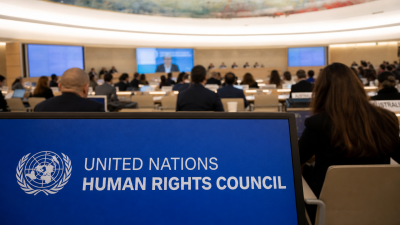
Recent UN human-rights work has become a site of geopolitical contest. Claims of flawed methodology, selectivity and external pressure now accompany high-profile reports — including the Secretary‑General’s listing of Israel and the Russian Federation for patterns of sexual violence, and scrutiny of digital and climate-related discourse within UN fora.
What is the current issue and why it matters
The term “weaponisation” denotes use of UN human‑rights reports and mandates as instruments of political pressure rather than neutral human‑rights inquiry. This affects state relations, multilateral legitimacy, policy coherence and the protection of victims. It also shapes regulatory sovereignty in areas such as the digital economy and climate policy.
Definition and nature
Weaponisation of UN Human Rights Council (UNHRC) reports: instrumental use of investigatory, reporting or mandate mechanisms to advance geopolitical aims, select targets, or apply asymmetric pressure on states. Features include contested methodology, selective country focus, donor influence and lack of judicial character in fact‑finding.
Factors contributing to politicisation
- Methodology and selectivity — Accusations that reporting uses flawed methods and uneven country selection. Recent statements by a UN member described selectivity in country‑specific assessments.
- Geopolitical narratives — Donors and political blocs can shape agendas and framing, producing perceived “anti‑state” narratives in conflict settings.
- Institutional limits — Many UN fact‑finding exercises lack independent technical verification, military expertise or judicial powers to adjudicate contested evidence.
- External pressure on norms — A UN Special Rapporteur has noted efforts to use freedom‑of‑speech rhetoric to legitimise harmful speech and described political/trade pressure by powerful states to export digital regulation models.
- Mandate proliferation — Growth of country mandates without uniform criteria increases perceptions of selectivity.
- Domestic rejection — States may reject reports as biased or unverified, reducing chance of constructive engagement.
Impacts on UN credibility and international relations
- Erosion of trust — States question impartiality and resist cooperation with UN mechanisms.
- Diplomatic polarisation — Reports can harden positions and prompt counter‑narratives instead of remedies.
- Operational diversion — Energy shifts from protection and remedy to procedural disputes and political contests.
- Reputational damage — Listing states in high‑profile reports affects international standing even when methodology is contested.
Specific instances and political responses
| Country / Situation | Allegation or UN action | Political response |
|---|---|---|
| Gaza / Israel | UNHRC received reports of grave violations affecting children; Secretary‑General’s report listed Israel among State actors implicated in patterns of sexual violence. | Questions raised about verification and military expertise in inquiry processes; strong political contestation. |
| Russia / Ukraine | Secretary‑General’s report listed the Russian Federation for patterns of sexual violence. | Russian delegation asserted flawed methodology and alleged Western‑led narrative bias in reporting. |
| Myanmar | Allegations of serious crimes. Claims that reporting shows persistent imbalance and overlooks crimes by non‑state terrorist groups. | Calls for more balanced coverage and consistent criteria for country mandates. |
| Jammu & Kashmir (India) | Earlier UN reports were rejected by India as unverified and biased. | India demands impartial evidence and favours dialogue over denunciation. |
| Eritrea | Mandate of Special Rapporteur extended amid concerns about indefinite national service. | Extension carried with mixed vote; some states abstained or opposed extension. |
Challenges for sovereign states
- Balancing sovereignty and obligations — States must reconcile non‑interference with compliance to international norms.
- Countering perceived bias — Limited mechanisms to contest findings short of public rejection, which can reduce cooperation.
- Diplomatic cost — Responding to reports may strain bilateral ties or multilateral engagement.
- Regulatory sovereignty — External pressure to adopt specific digital rules or climate positions can constrain domestic policy choices.
Weaponisation beyond traditional human rights: digital space and climate discourse
UN mechanisms are being invoked in debates beyond classical civil and political rights. A Special Rapporteur noted the “weaponisation of freedom of speech” to legitimise harmful rhetoric. States have warned against using human‑rights fora to renegotiate climate treaties or to misrepresent the legal independence of instruments such as the Paris Agreement. Political pressure by powerful states to export digital regulation models raises concerns about regulatory sovereignty.
Way forward: reforms and practical measures
| Problem | Reform / Measure |
|---|---|
| Flawed methodology and selectivity | Adopt transparent, standardised methodologies with published criteria for case selection and evidence thresholds. |
| Lack of independent verification | Create independent technical panels (forensic, military, legal) to verify contested facts before publication. |
| Perceived donor influence | Mandate donor transparency and firewalling of investigative mandates from political donors. |
| Impartiality of mandate holders | Strengthen appointment norms, vetting and shorter, non‑renewable terms to reduce capture. |
| Scope creep into non‑HR treaties | Clarify institutional remit: distinct UN fora should address climate and trade issues; HRC should avoid treaty renegotiation. |
| State reluctance to engage | Promote conditional engagement: combine investigative work with technical assistance and dialogue mechanisms. |
Policy options for India
- Evidence‑based engagement — Demand verifiable data and independent technical verification in contested cases.
- Defensive diplomacy — Use bilateral and plurilateral channels to press for procedural reform while avoiding public isolation.
- Constructive participation — Support institutional changes that increase transparency and depoliticise mandates.
- Domestic narrative and compliance — Improve domestic transparency on human‑rights measures to reduce fodder for politicised reporting.
Model Questions
1. Analyse the concept of ‘weaponisation of UN Human Rights Council reports’ and its implications for international relations and the credibility of multilateral institutions. [GS‑II: International Relations]
Weaponisation means using UNHRC reports as political tools rather than impartial investigations. Implications include erosion of trust in UN mechanisms, politicised diplomacy, reduced state cooperation, diversion of resources to procedural disputes, and reputational harm to listed states. Recent contested listings and methodological critiques show how such perceptions undermine remedial action and weaken the UN’s capacity to protect victims or mediate conflicts.
2. Critically examine factors contributing to the politicisation of UN human rights mechanisms, with reference to recent concerns about methodology, selectivity and external influence. [GS‑II: Governance]
Key factors are non‑uniform methodologies, donor and bloc influence, mandate proliferation without clear criteria, absence of independent technical verification, and geopolitical rivalries shaping narratives. Specific concerns include allegations of flawed methodology in reporting and pressure by powerful states to export regulatory norms. Remedies include transparent methods, independent verification panels, donor disclosure and clearer mandate criteria.
3. In light of India’s response to prior UN reports on Jammu & Kashmir, discuss the challenges sovereign states face in safeguarding national interests while adhering to international human rights norms. Propose a balanced approach for India. [GS‑II: Governance]
Sovereign states face tension between defending territorial integrity and meeting international expectations. Challenges include contested evidence, reputational costs, and diplomatic pressure. India’s balanced approach should combine rigorous demands for independent verification, calibrated diplomacy, constructive participation in reform of UN procedures, targeted domestic transparency measures, and selective use of technical cooperation to address genuine rights concerns while resisting politicised denunciation.
4. Beyond traditional human rights, how are UN mechanisms being used to influence international discourse on climate treaties and digital sovereignty? Suggest safeguards to prevent misuse. [GS‑III: Environment & DM]
UN human‑rights fora have been invoked to critique climate policy framing and to press for digital regulatory norms. This can blur legal mandates, leading to attempts to renegotiate treaty obligations or export regulatory models through human‑rights pressure. Safeguards include clearer institutional remits, avoiding treaty renegotiation in rights fora, multi‑stakeholder rule‑making for digital governance, and respecting the legal independence of instruments such as the Paris Agreement.
Last Modified: July 9, 2026