
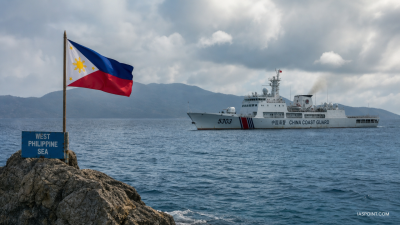
The tenth anniversary of the South China Sea Arbitral Award was marked on 12 July 2026. The PCA award of 2016 remains legally binding under UNCLOS but contested in practice. Recent diplomatic statements and commemorative actions have renewed focus on legal, security and regional governance consequences.
What is current and why it matters
The Permanent Court of Arbitration issued the award on 12 July 2016 under Annex VII of UNCLOS. The tribunal found China’s Nine‑Dash Line had no legal basis and that several maritime features do not generate an EEZ. China rejects the award and did not take part in the arbitration. A 14‑state joint statement in 2026 reiterated the award’s finality. The EU issued a statement of concern; the Philippines and US marked the anniversary with naval commemorations.
Legal framework and enforcement limits
UNCLOS and the tribunal finding
- Jurisdiction: Annex VII provides arbitration when disputing parties do not choose a forum.
- Key legal rulings: Nine‑Dash Line has no legal basis; certain features (e.g. parts of the Spratlys, Scarborough, Second Thomas Shoal) are not islands under UNCLOS and do not produce EEZs; China violated Philippine sovereign rights and caused environmental harm through reclamation.
- Institution: The PCA is an intergovernmental organisation based in The Hague.
Enforcement constraints
- No executive arm: UNCLOS and the PCA have no military or policing mechanism to enforce awards.
- State compliance: Compliance depends on state consent, diplomatic pressure and coalitions; major power rejection reduces effectiveness.
- Legal opt‑outs: China issued an Article 298 declaration limiting compulsory dispute settlement for certain maritime disputes, and did not participate in the arbitration.
Security dynamics and regional risks
- Militarisation: Artificial islands now host radar, airstrips and force‑projection assets. This alters tactical distances and surveillance reach.
- Gray‑zone tactics: Use of coast guards, maritime militia, water cannons and harassment of resupply vessels (e.g. at Second Thomas Shoal) raises collision and escalation risk.
- Freedom of navigation and trade: The South China Sea carries major commercial flows. Restrictions or interdictions would affect energy and trade security for littoral and extra‑regional states.
- Alliances and incidents: Commemorative naval actions and joint patrols increase deterrence but also the probability of direct confrontation under mutual defence commitments.
India’s policy posture
- Policy shift: India moved from merely noting the award to publicly urging adherence. India endorsed the rule of law in maritime affairs in bilateral talks with the Philippines.
- Strategic drivers: Trade and energy routes via the South China Sea; ONGC Videsh projects in the region; Act East policy priorities.
- Security cooperation: Upgrading ties with the Philippines to a Strategic Partnership and defence exports (BrahMos), increased naval visits, joint exercises and maritime domain awareness cooperation.
- Balancing act: India supports UNCLOS and a rules‑based order while managing a complex bilateral relationship with China.
ASEAN, the Code of Conduct and institutional limits
- CoC objective: A legally binding Code of Conduct aims to manage incidents, restrict militarisation and provide predictability.
- Constraints: ASEAN consensus rule allows external influence to dilute collective positions. Disagreement persists on the CoC’s legal bindingness, geographic scope and dispute‑settlement terms.
- China’s preference: Beijing favours bilateral negotiation with claimants, which exploits asymmetric leverage.
- Practical steps: Finish a UNCLOS‑consistent binding CoC, enhance littoral coast guard capacity, and pursue minilateral security cooperation for maritime domain awareness and incident management.
Stakeholders — positions and leverage
| Stakeholder | Position / Action | Relevance |
|---|---|---|
| PCA / Philippines | Legal award upheld; Philippines uses award to assert EEZ rights; marks 12 July as West Philippine Sea Victory Day | Legal basis for maritime claims and diplomatic leverage |
| China | Rejects award; pursues island reclamation, coast guard deployments; prefers bilateral talks | De facto control and regional influence |
| Extra‑regional states (US, EU, Japan, Australia, NATO partners) | Affirm award’s finality; freedom of navigation operations and diplomatic pressure | Security backing for claimants; deterrence and diplomatic pressure |
| ASEAN | Seeks CoC; internal divisions slow progress | Central regional forum; arbiter of stability if consensus regained |
Policy implications and ways forward
- Legal instruments: Use the award for diplomatic and juridical claims, third‑party arbitration for future disputes, and environmental liability claims where evidence exists.
- Diplomatic strategy: Build coalitions to increase cost of non‑compliance through coordinated statements, trade and investment policy alignment, and targeted sanctions where feasible.
- Security measures: Strengthen littoral coast guards, share maritime domain awareness, institutionalise incident‑management hotlines, and calibrate naval presence to reduce miscalculation.
- ASEAN action: Prioritise a binding, UNCLOS‑compatible CoC; limit external vetoes within consensus procedures; increase capacity‑building assistance for smaller claimants.
Model Questions
1. Examine the systemic challenges in enforcing arbitral decisions under UNCLOS, drawing on the South China Sea Arbitral Award. [GS-II: International Relations]
India’s legal options include diplomatic use of the award, coalition building and third‑party forums. Enforcement is limited because UNCLOS lacks an executive enforcement mechanism and compliance depends on state consent. Major‑power rejection, Article 298 opt‑outs and asymmetry in coercive capacity reduce practical effect. Remedies are political: coordinated sanctions, maritime cooperation, capacity building for littoral states and using forums like the UN and regional groupings to increase non‑compliance costs.
2. Analyse security implications of the militarisation of artificial islands and contested features in the South China Sea for the Indo‑Pacific region. [GS-III: Internal & External Security]
Militarisation extends surveillance and strike envelopes, constraining manoeuvre and raising blockade risks. Gray‑zone tactics by maritime militias and coast guards increase collision and escalation likelihood. Sea‑lane security and energy transport are threatened, prompting deeper security ties between claimants and external powers. Resultant strategic competition raises the chance of standoffs, complicates crisis management and increases demands on regional maritime policing resources.
3. Assess India’s evolving foreign policy stance on the South China Sea and its strategic calculations. [GS-II: International Relations]
India shifted from a cautious stance to publicly urging adherence to the 2016 award. Drivers include trade and energy security via the Malacca gateway, ONGC Videsh interests, Act East priorities and desire to uphold a rules‑based maritime order. Policy tools are strategic partnerships (e.g. Philippines), defence exports (BrahMos), naval diplomacy and maritime domain awareness cooperation, balanced against managing bilateral tensions with China.
4. Evaluate the role and limitations of ASEAN in managing South China Sea disputes and steps to strengthen its effectiveness. [GS-II: International Relations]
ASEAN provides the primary regional platform but consensus decision‑making and economic dependence of some members on China limit assertiveness. China’s preference for bilateral engagement bypasses multilateral mechanisms. To improve effectiveness, ASEAN should conclude a legally binding, UNCLOS‑consistent CoC, enhance enforcement and incident‑management mechanisms, and pursue targeted capacity building and minilateral security partnerships to support smaller littoral states.
Last Modified: July 13, 2026