
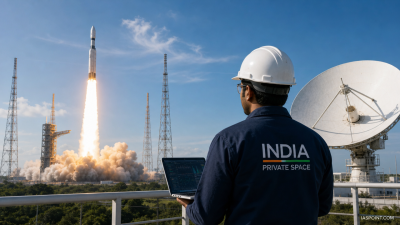
Private investment in India’s space sector reached USD 618.5 million by 31 March 2026, with USD 187 million recorded in 2026; these figures were presented to Parliament by the Minister of State for Science and Technology on 23 July 2026.
What is current
IN-SPACe has authorised 105 non-governmental activities. The India Space Policy 2023 governs private participation. Active space startups increased from one in 2014 to over 400. Government financial support includes the IN-SPACe Seed Fund, a ₹500 crore Technology Adoption Fund and a ₹1,000 crore Venture Capital Fund for the sector.
Why it matters
Governance: Institutional separation clarifies roles between ISRO, IN-SPACe and NSIL, reducing state-commercial conflicts. Economy: Rising private funding boosts manufacturing, services and exports in a sector with long value chains. Security: Indigenous launch and satellite capabilities lower dependence on foreign providers for critical data. Technology & skills: Private activity accelerates R&D, productisation and specialised human capital formation.
Institutional roles and division
| Entity | Primary role |
|---|---|
| ISRO | Core R&D, fundamental missions, advanced technology development and testing facilities. |
| IN-SPACe | Authorisation, single-window promotion and regulatory facilitation for non-governmental entities. |
| NewSpace India Limited (NSIL) | Commercialisation of ISRO technologies, transfer of assets, and supply of commercial launch services. |
| Private firms/startups | Manufacture of satellites and subsystems, launch vehicle development, downstream services and data analytics. |
Financial and investment trends
- Scale: Cumulative private investment reached USD 618.5 million by 31 March 2026; USD 187 million added in 2026.
- Sources: Domestic venture capital, private equity, strategic corporate investors and government-backed venture funds.
- Public measures: IN-SPACe Seed Fund, Technology Adoption Fund (₹500 crore), ₹1,000 crore Venture Capital Fund for scaling firms.
Start-up ecosystem and value chain coverage
- Numbers: Active startups exceeded 400, spanning upstream, midstream and downstream activities.
- Activities: Small-satellite manufacturing, launch vehicle sub-systems, propulsion, payloads, Earth observation analytics and GNSS services.
- Market orientation: Mix of domestic demand (government, telecom, agriculture, disaster management) and international commercial customers.
Regulatory, legal and operational gaps
- Statutory framework: No comprehensive Space Activities Act to define licensing permanence, liability, insurance and IP arrangements.
- Inter-agency clearances: Spectrum allocation, range approvals and environmental clearances require coordination; delays persist despite IN-SPACe.
- Liability & insurance: Third-party liability and indemnity rules are not codified for private launches and re-entries.
- Finance risk: High capital intensity and long gestation deter continuous private capital beyond government-backed funds.
- Global market share: India’s share of the global space economy remains limited; scaling launch cadence and reliability is necessary to capture market.
Strategic and geopolitical implications
- Strategic autonomy: Domestic launch and satellite services reduce reliance on foreign providers for strategic data and logistics.
- Global competitiveness: Cost-competitive small-satellite launches and services can attract international customers and export revenue.
- Dual-use applications: Private constellations and EO services augment disaster response, border management and maritime surveillance.
- Partnerships: Private firms can expand diplomatic reach via commercial collaboration, technology partnerships and supply-chain linkages.
Way forward — actionable measures
- Legislate a Space Activities Act: Define licensing regime, third-party liability, insurance, IP rights and dispute settlement aligned with international treaties.
- Streamline clearances: Fast-track spectrum and range approvals through formal protocols between IN-SPACe, Department of Space and other ministries.
- Scale finance: Expand blended finance models combining government seed funds, concessional debt and private VC to reduce capital risk.
- Technology transfer: Formalise access to ISRO test facilities and legacy technologies under transparent commercial terms for startups.
- Skill development: Integrate space engineering, propulsion and data analytics into higher education and vocational training.
Model Questions
1. Analyse the factors driving the growth of private investments in India’s space sector and assess the role of policy and financial mechanisms in this transition. [GS-III: Economic Development]
Private growth is driven by policy opening (India Space Policy 2023), IN‑SPACe authorisations, liberalised FDI for select activities and a larger startup base. Financial mechanisms include the IN‑SPACe Seed Fund, ₹500 crore Technology Adoption Fund and a ₹1,000 crore Venture Capital Fund. These reduce early-stage risk, attract private capital and enable scale-up from component manufacturing to launch and downstream services, shifting the sector toward market orientation.
2. Explain the functional division between ISRO, NSIL and IN-SPACe and how this structure supports non-governmental space enterprises. [GS-III: Science & Technology]
ISRO focuses on core R&D and advanced missions; NSIL commercialises ISRO technologies and offers launch services; IN‑SPACe provides single-window authorisation and promotion for private entities. This division separates policy, commercial and research roles, reduces conflicts of interest, facilitates technology transfer and grants operational clearances, enabling startups to access facilities, buy commercial launches and monetise downstream services.
3. Identify the key regulatory and governance gaps in India’s private space sector and suggest legal measures to address them. [GS-II: Governance]
Gaps include absence of a Space Activities Act, unclear third-party liability and insurance norms, and fragmented clearances for spectrum and ranges. Legal measures: enact a Space Activities Act to codify licensing, liability and IP; establish statutory roles for IN‑SPACe; create expedited protocols for spectrum and environmental clearances; mandate insurance and financial guarantees for launches to allocate risk and enable private participation.
4. Evaluate the strategic and geopolitical benefits of commercialising India’s space sector in the context of the global space economy. [GS-III: Internal & External Security]
Commercialisation builds indigenous launch and satellite capacity, reducing dependence on foreign providers for surveillance and communications. It offers export opportunities in small-satellite launches and EO services, strengthens supply chains, and supports dual-use capabilities for disaster response and border monitoring. Private international partnerships expand influence while domestic capability enhances resilience against geopolitical supply shocks.
Last Modified: July 24, 2026