
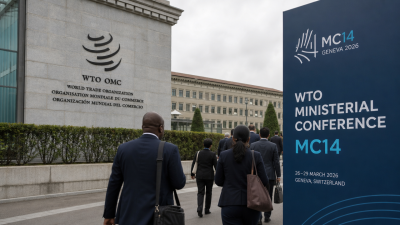
India is negotiating at the WTO to preserve policy space for industrial support while developed economies press for tighter subsidy disciplines. The contest frames WTO reform, SDT implementation, and the use of ASCM rules to address alleged industrial dominance and trade distortions.
What is the issue?
The core issue is balancing two objectives: allow developing countries to use public support for industrialisation, employment and structural transformation; and prevent trade distortions arising from large-scale subsidies by economically dominant states. Developed economies seek stronger WTO subsidy disciplines; India and other developing members seek differentiated treatment and policy flexibility.
Why it matters
– Economic development: Industrial policy tools (PLI, targeted incentives, infrastructure support) are central to India’s Viksit Bharat goal and job creation. – Trade stability: Unchecked subsidies by large economies can displace firms and distort markets worldwide. – Multilateral governance: Outcomes will shape WTO relevance, SDT credibility and dispute-settlement burdens. – Political economy: Rules will affect fiscal space, domestic reform choices and bilateral trade bargaining.
India’s position and development imperatives
India negotiates to retain calibrated policy space for manufacturing, green industrialisation and employment generation. It argues, with OECD MAGIC Database and RIS analysis, that India’s corporate subsidy footprint is a small fraction of that of China, the US and advanced economies. India emphasises non‑uniform rules that allow time‑bound, targeted support for nascent industries and for firms in regions with employment deficits. Domestic instruments relevant to negotiations include Production Linked Incentive (PLI) schemes, electronics and EV incentives, and industrial park investments.
WTO reform debate: competing claims
Developed countries’ stance
– Advocate stricter ASCM disciplines to address alleged systemic subsidies by dominant economies. – Seek presumptions against hidden or export‑contingent support and faster remedies.
Developing countries’ stance
– Demand continued SDT, differentiated rules and exemptions for non‑dominant developing members. – Emphasise capacity constraints, fiscal limits and the need for policy space during structural transformation.
Proposed WTO framework for industrial dominance
| Criterion | Dominant countries | Non‑dominant developing countries |
|---|---|---|
| Income threshold | Per capita income above USD 14,000 | Below threshold; treated as developing |
| Trade/industrial metrics | Specific export/manufacturing thresholds apply | Exempt from stricter thresholds |
| Rules | Tighter ASCM disciplines, presumptions against hidden subsidies | Greater policy flexibility, phase‑in and carve‑outs |
This differential approach intends to target rules at large, high‑income exporters while preserving space for late‑comers to industrialise.
ASCM reforms under discussion
- Transparency and notification: Stronger notification requirements, standardised data templates and public registries (to improve identification of subsidies).
- Presumptions and burden of proof: Proposals for presumptions against certain measures by dominant states and revised evidentiary rules in disputes.
- Provisional remedies: Easier use of provisional duties or interim measures to address sudden trade injury from subsidised imports.
- Narrowing prohibited categories: Debate on whether to expand explicit prohibitions (e.g. export‑contingent or import‑substitution subsidies) or retain case‑by‑case tests.
Special and Differential Treatment (SDT) and LDC graduation
SDT remains central for developing members. Key elements sought by India and small states: longer phase‑ins for new obligations, continued access to flexibilities for industrial policy, technical assistance and capacity‑building. Support for countries graduating from LDC status is unresolved; delegates stress transitional arrangements to avoid abrupt loss of benefits.
Impact on developing countries, small states and LDCs
– Countries with limited subsidy footprints could retain policy space if differentiation is accepted. – Small states and LDCs require clarity on thresholds and continued assistance for policy design and compliance. – Risk: broad or poorly defined disciplines could constrain legitimate development measures, affect employment programmes and raise fiscal pressures.
Bilateral negotiations and multilateral agenda
Bilateral talks, such as high‑level India‑US negotiations, address specific tariff and trade concerns and can influence multilateral positions. Risks include fragmentation if plurilateral or bilateral norms become de facto standards. Strengthening the WTO requires simultaneous progress in multilateral rule‑making, transparency mechanisms and capacity support to members.
Institutional and legal implications
– Stronger ASCM rules would increase dispute‑settlement caseload and demand better fact‑finding capacity. – Enhanced notification systems need technical and budgetary support at the WTO. – Any new presumptions or thresholds must be legally precise to avoid arbitrary application and unintended trade friction.
Challenges and trade‑offs
- Measurement: Identifying and quantifying subsidies, especially indirect or regulatory supports, is technically hard.
- Political economy: Domestic vested interests may resist transparency and reform.
- Fiscal constraints: Developing countries face limits in replacing subsidies with other support mechanisms.
- Enforcement: Differentiated rules increase complexity and scope for litigation.
Way forward: calibrated reforms
- Targeted rules: Focus on clearly harmful practices (export contingencies, large-scale hidden transfers) rather than blanket prohibitions.
- Thresholds and phase‑ins: Use per‑capita and sectoral thresholds with transition periods to protect late‑industrialisers.
- Transparency and data: Strengthen notification templates, use OECD/MAGIC and other shared data sources, and support capacity building for compliance.
- SDT operationalisation: Convert SDT into measurable, time‑bound flexibilities with technical assistance and financing for LDC graduates.
- Multilateral safeguards: Preserve the WTO as the primary forum and limit spillover from bilateral deals that erode multilateral protections.
Model Questions
1. Critically analyse India’s arguments for retaining industrial policy space at the WTO in pursuit of the ‘Viksit Bharat’ vision. [GS-III: Economic Development]
India argues that targeted, time‑bound industrial support is essential for manufacturing expansion, employment and structural transformation under Viksit Bharat. It cites OECD MAGIC data showing its corporate subsidies are small relative to China, the US and EU. Retaining policy space allows use of PLI and sectoral incentives. WTO rules must therefore be differentiated, include SDT, and allow transitional measures to avoid constraining development policy.
2. Explain the proposed WTO framework for defining industrial dominance and assess its likely effects on non‑dominant developing countries. [GS-II: International Relations]
The proposed framework uses a per‑capita income threshold (USD 14,000) plus export/manufacturing metrics to label dominant countries. Dominant members would face stricter ASCM disciplines. Non‑dominant developing countries would retain policy flexibility and phased obligations. Effects: preserves room for industrialisation but requires clear thresholds and monitoring to prevent misclassification and to protect small states and LDCs.
3. Examine the debate on stricter accountability and transparency under the ASCM, particularly concerning presumptions against hidden subsidies and provisional duties. [GS-III: Economic Development]
Proposals include stronger notification, standardised data, presumptions against concealed support by dominant players, and easier provisional remedies. Benefits: faster relief against harmful subsidies and improved visibility. Risks: higher compliance costs, potential misuse of presumptions, and legal uncertainty. Balanced reform requires precise legal definitions, robust fact‑finding, technical assistance and safeguards for legitimate development measures.
4. Analyse how bilateral negotiations, such as India‑US talks, can influence the multilateral WTO agenda and the interests of developing countries. [GS-II: Governance]
Bilateral talks can resolve specific issues (tariffs, market access) and shape negotiating postures at the WTO. They may create pressure for harmonised rules or carve‑outs that bypass multilateral consensus. For developing countries, this risks rule fragmentation and unequal bargaining outcomes. Strengthening multilateral processes, protecting SDT, and ensuring transparency in bilateral outcomes are necessary to safeguard collective development interests.
Last Modified: June 24, 2026