
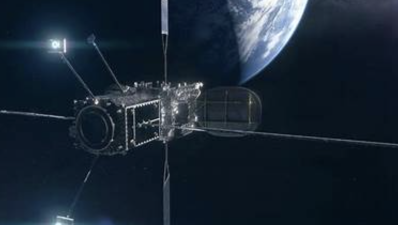
A Chennai-based space startup is preparing to launch AyulSAT, a dedicated tanker-satellite, to demonstrate in-orbit propellant transfer, power transfer and data transfer. The mission aims to show how satellites can be serviced in space, extended in lifespan and made less dependent on replacement launches. It is step towards an emerging on-orbit servicing ecosystem.
AyulSAT Mission
AyulSAT will be launched on a Polar Satellite Launch Vehicle and will use the Standard Interface for Docking and Refuelling Port, or SIDRP. The first demonstration will involve transferring fuel from one tank to another within the satellite. This will test the core refuelling architecture before actual satellite-to-satellite servicing begins.
In-Orbit Refuelling Technology
The mission is designed to support future refuelling of satellites in low Earth orbit and geostationary orbit. A later mission will involve a chaser satellite docking with AyulSAT to demonstrate actual refuelling in orbit. This will be a key step in proving rendezvous, proximity operations and docking, known as RPOD.
Strategic Importance for India
The demonstration places India among a small group of countries working on in-orbit refuelling. Such capability can extend satellite life, reduce launch costs and lower space debris by decreasing the need to replace satellites prematurely. It also supports long-duration commercial missions and future human spaceflight requirements.
On-Orbit Economy and Debris-Free Space
The mission is linked to the idea of an on-orbit economy, where satellites can be serviced, refuelled and maintained in space. It also aligns with India’s Debris-Free Space Mission 2030. If successful, the technology could create a foundation for orbital fuel stations and more sustainable space operations.
Last Modified: April 25, 2026