
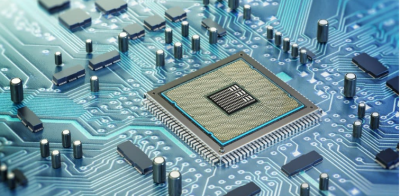
India has taken step towards silicon photonics technology sovereignty with the launch of two indigenous solutions at the MeitY-sponsored Centre of Excellence for Programmable Photonic Integrated Circuits and Systems (CoE-CPPICS), IIT Madras. The launch included a Silicon Photonics Process Design Kit (PDK) for photonics chip manufacturing and a Universal packaged PPIC Test Engine for automated testing and characterisation of photonic and optoelectronic modules.
Key Launches
- The Silicon Photonics PDK contains over 50 verified components.
- It supports design enablement for industries, startups, academic institutions and defence R&D organisations.
- The Universal PPIC Test Engine is an automated platform for characterising photonic modules.
- Both tools are intended to strengthen India’s domestic photonics ecosystem.
Strategic Significance
Silicon photonics is important for high-speed data transfer, sensing, communications and emerging quantum technologies. The new tools are expected to reduce dependence on foreign design ecosystems and improve India’s capability in advanced photonic integrated circuits. The development is also relevant for the India Semiconductor Mission, which aims to build a stronger domestic semiconductor and advanced electronics base.
Institutional and Industrial Ecosystem
The CoE-CPPICS follows a Product Research, Development and Manufacturing model using CMOS-compatible silicon photonics technology. It works with SilTerra Malaysia as foundry partner and izmo Microsystems, Bengaluru, as packaging partner. The centre is also preparing to enable multi-project wafer fabrication runs, along with testing, packaging and module characterisation services.
Future Roadmap
The next phase of technology development has been launched under the centre. Officials indicated that after successful commercial demonstration, India may move towards a silicon photonics fabrication facility with integrated packaging support. The development is expected to support further technology improvement, product development and possible future R&D support under the upcoming ISM 2.0 framework.
Last Modified: April 25, 2026