
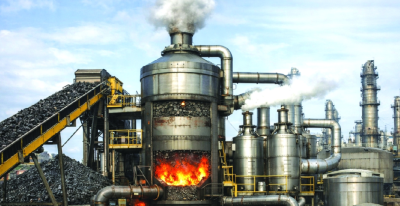
The Ministry of Coal organized a high-level roadshow in New Delhi to promote Surface Coal and Lignite Gasification Projects, focusing on the newly approved financial incentive scheme with an outlay of ₹37,500 crore. This public outreach initiative serves to accelerate the development of a domestic coal gasification ecosystem across India. By transforming vast domestic coal and lignite reserves into essential chemicals and clean fuels, the program directly aims to reduce the country’s reliance on high-value imports. The strategic rollout supports India’s long-term economic vision of self-reliance and complete industrial resilience by the year 2047.
Core Objectives and Strategic Targets
Enhancing Energy Security
The scheme aims to diversify the use of India’s domestic energy resources. By producing substitute fuels locally, the initiative insulates the domestic market from global price volatility and sudden geopolitical supply chain bottlenecks.
Import Substitution
India currently relies heavily on imports for critical industrial feedstocks. The scheme targets the domestic production of alternatives to substitute the import of:
- Liquefied Natural Gas (LNG)
- Urea and Ammonium Nitrate
- Methanol and Ammonia
- Coking Coal for steel manufacturing
National Target Realization
The financial scheme serves as a mechanism to achieve the overarching goals of the National Coal Gasification Mission. The primary target is to gasify 100 Million Tonnes (MT) of coal by 2030, with this specific scheme directly funding the gasification of roughly 75 MT of coal and lignite.
Scheme Architecture and Financial Outlay
Subsidy and Support Matrix
The central government provides financial incentives up to a maximum of 20% of the total cost of Plant and Machinery. To ensure fiscal discipline and widespread distribution of funds, the government has instituted specific financial caps:
| Fiscal Parameter | Allocation Cap Value |
| Total Program Outlay | ₹37,500 crore |
| Maximum Incentive per Project | ₹5,000 crore |
| Maximum Incentive per Product | ₹9,000 crore (excluding Synthetic Natural Gas and Urea) |
| Maximum Cap for a Single Entity Group | ₹12,000 crore across all funded projects |
Selection and Disbursement Mechanism
Project selection relies on a transparent, competitive bidding process. The evaluation framework benchmarks multiple parameters including projected project costs, raw coal input requirements, and total synthesis gas output. The approved financial incentive is disbursed to developers in four equal installments, with each release directly linked to the successful completion of specified project milestones.
Policy and Regulatory Concessions
The scheme works in tandem with broad structural reforms in the coal sector. The government extended the coal linkage tenure up to 30 years under the “Production of Syngas leading to Coal Gasification” sub-sector within the Non-Regulated Sector linkage auction framework. This extension offers long-term fuel availability and policy certainty for private and public developers. Additionally, the scheme is technology-agnostic, enabling developers to choose the most efficient systems while remaining eligible for concurrent benefits under commercial coal mining regimes.
Socio-Economic and Environmental Impact
Macroeconomic Mobilization
The scheme acts as a catalyst for large-scale capital deployment. It expects to mobilize total investments worth ₹2.5 lakh crore to ₹3 lakh crore across 25 distinct industrial projects located in coal-bearing regions.
Employment and Revenue Generation
The establishment of these facilities will create approximately 50,000 direct and indirect jobs. On the fiscal side, the utilization of 75 MT of coal under this framework will generate around ₹6,300 crore in annual direct revenue for state governments, supplemented by downstream Goods and Services Tax (GST) collections.
Technological Advancement
By supporting early-stage infrastructure, the initiative fosters a local ecosystem for engineering, procurement, and construction contractors. This reduces dependence on foreign technology providers and builds domestic capacities in advanced surface coal gasification.
Scientific Principles of Coal Gasification
The Gasification Process
Coal gasification is a thermo-chemical process that breaks down coal into its chemical components. Unlike traditional coal combustion, which burns coal to generate heat and electricity, gasification uses limited oxygen and steam under high pressure to chemically alter the material.
Synthesis Gas Composition
The primary product of this process is synthesis gas, or syngas. Syngas is a highly versatile mixture consisting mainly of:
- Carbon Monoxide (CO)
- Hydrogen (H2)
- Carbon Dioxide (CO2)
- Natural Gas / Methane (CH4)
Environmental Profile
Surface gasification is categorized as a cleaner coal technology. It allows for the extraction of pollutants like sulfur, mercury, and ash before the gas is utilized for downstream applications, resulting in lower particulate matter and sulfur dioxide emissions compared to direct coal burning.
IASPOINT Booster Facts for UPSC
- India’s Resource Base: India holds approximately 401 billion tonnes of coal reserves and 47 billion tonnes of lignite reserves. Coal satisfies over 55% of India’s current commercial energy mix.
- Evolution of the Policy: The roadmap began with the National Coal Gasification Mission in 2021. It progressed through an initial ₹8,500 crore incentive scheme in January 2024, which currently funds eight active projects, before expanding into the current ₹37,500 crore policy framework.
- The Revenue Share Concession: To incentivize cleaner alternatives, the Ministry of Coal offers a 20% concession on the revenue share of coal if the excavated mineral is utilized specifically for coal gasification projects.
- Institutional Governance: A specialized National Steering Committee on Surface Coal Gasification monitors the progress of the mission. The committee operates under the chairmanship of NITI Aayog member Dr. V.K. Saraswat.
- Syngas Uses: Syngas serves as a chemical block. It can be converted directly into methanol, processed via the Haber-Bosch process for ammonia and urea production, or processed into synthetic natural gas to supply urban gas distribution networks.