
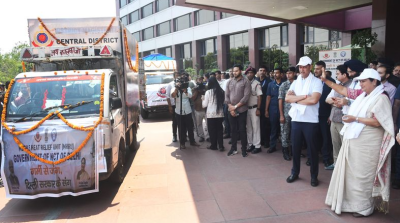
The Delhi government implemented its intensified Heat Action Plan on May 6, 2026, deploying specialized mobile heat relief vans across 13 districts to address escalating thermal stress. Operating during peak heat hours from 11 AM to 6 PM, these units target highly vulnerable areas including labor markets, congested transit hubs, and informal settlements. The framework integrates localized meteorological data with direct public health interventions to mitigate severe heatwave risks. The initiative reflects a growing shift across Indian urban administrative bodies to institutionalize heat resilience strategies amid rising baseline global temperatures.
Structural Mechanics of the Heat Action Plan
The 2026 framework shifts from generalized alerts to data-driven, localized interventions based on satellite thermal mapping.
Mobile Relief Infrastructure
- District Deployment: One specialized mobile heat relief van is assigned to each administrative district, moving dynamically across pre-identified thermal hotspots.
- Essential Supplies: Every van serves as a mobile hydration and first-aid point, stocking cold water, Oral Rehydration Salts packets, basic medical kits, cotton towels, and protective headwear.
- Human Resource Mobilization: Ten Civil Defence volunteers per district are integrated into the fieldwork to manage logistical distribution and conduct community-level awareness.
Thermal Hotspot Identification
The plan utilizes satellite-derived surface temperature data to pinpoint vulnerable microclimates. The primary target zones are categorized into distinct risk types:
- Meteorological Hotspots: Areas traditionally recording high dry-bulb temperatures, such as Ayanagar, Najafgarh, and Safdarjung.
- Industrial and Commercial Hotspots: Zones with extensive concrete cover and low vegetation, including Wazirpur, Jahangirpuri, Khayala, Shastri Park, and Vishwas Nagar.
- Urban Heat Islands: Densely populated informal or fringe settlements experiencing high thermal entrapment, such as Sawda, Mubarakpur Dabas, Bhalswa, Nand Nagri, Gokulpuri, and Bakkarwala.
Institutional Adjustments and Public Health Mandates
The multi-sectoral strategy introduces mandatory changes across labor, education, health, and urban infrastructure sectors.
Labor and Education Regulated Timelines
- Outdoor Work Suspension: Public health advisories mandate the halting of outdoor physical labor between 12 PM and 3 PM during intense heatwave windows to protect construction and manual workers.
- The Water Bell System: Educational institutions are required to sound a periodic structural bell to enforce hydration breaks among student cohorts, alongside suspending outdoor sports activities.
- Commute Protection: Schools are advised to distribute ORS solutions to children prior to afternoon dispersal to counter high transit temperatures.
Clinical and Power Infrastructure Protocols
- Health Centre Alert: Over 339 primary health centers have been provisioned with dedicated stockpiles of emergency cooling medicines and intravenous fluids.
- Dedicated Cool Rooms: More than 30 major public hospitals have established five-bed emergency “cool rooms” equipped with specialized cooling equipment and ice packs to manage active heatstroke cases.
- Priority Power Grid Allocation: With peak electricity demands projected to clear 9,000 Megawatts due to cooling loads, a strict utility protocol guarantees 24×7 power supply to hospitals, water treatment facilities, and communication infrastructure.
Passive Cooling and Urban Retrofitting
- Cool Roof Policy: The administration has initiated the application of solar-reflective white coatings across public assets, including an initial 28,674 square feet of roof space at the Kashmere Gate Inter-State Bus Terminus.
- Microclimate Cooling: High-pressure misting systems are stationed at dense bus transit shelters, while anti-smog guns are repurposed to spray atomized water droplets to lower ambient temperatures in congested corridors.
Criteria for Heatwave Classification in India
The India Meteorological Department determines heatwaves based on specific temperature thresholds and departures from regional norms.
| Geographical Region | Heatwave Threshold Criterion | Severe Heatwave Threshold Criterion |
| Plains | Maximum temperature touches ≥ 40°C | Maximum temperature touches ≥ 47°C |
| Hills | Maximum temperature touches ≥ 30°C | N/A |
| Coastal Regions | Maximum temperature touches ≥ 37°C | N/A |
| Normal Departure (All Regions) | Departure from normal is 4.5°C to 6.4°C | Departure from normal is >6.4°C |
| Absolute Temperature Trigger | Maximum temperature reaches ≥ 45°C | Maximum temperature reaches ≥ 47°C |
IASPOINT Booster Facts for UPSC
- Ahmedabad Heat Action Plan (2013): Ahmedabad became the first city in South Asia to design and implement a comprehensive early warning and heat response plan following a severe heatwave event in 2010. It serves as the foundational template for all modern urban Heat Action Plans in India.
- The Disaster Management Act, 2005 Status: Heatwaves are not currently listed as a “notified disaster” under the Disaster Management Act, 2005. This operational exclusion means states cannot access the National Disaster Response Fund and must limit heat mitigation spending to the 10% flexible window of the State Disaster Response Fund.
- The 16th Finance Commission Recommendation: Legal frameworks are evaluating recommendations to formally include heatwaves and lightning within the Notified National Disaster list for the 2026–2031 cycle to unlock systematic central funding.
- Wet-Bulb Temperature vs Heat Index: Traditional heat declarations rely on dry-bulb temperatures. The Heat Index and Wet-Bulb temperature combine ambient air temperature with relative humidity to measure the true physical heat stress on the human body, which is critical for coastal areas.
- Constitutional Right to Cooling: In the landmark M.K. Ranjitsinh & Ors. v. Union of India (2024) case, the Supreme Court recognized protection from the adverse impacts of climate change as an extension of the Fundamental Right to Life under Article 21. Policy analysts derive the “Right to Cool” and public cooling infrastructure mandates from this judicial principle.
- Urban Heat Island Effect: A phenomenon where urban metropolitan areas experience significantly higher temperatures than surrounding rural regions due to human activities, high concentrations of heat-trapping concrete and asphalt surfaces, and waste heat rejected by air conditioning systems.