
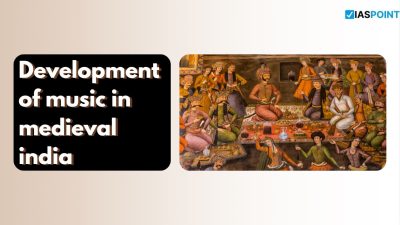
The development of music in medieval India reflects a rich tapestry of cultural influences. This period saw the fusion of various musical traditions shaped by regional, religious, and social factors. Music served not only as entertainment but also played a vital role in religious and cultural practices.
Regional Influences
India’s vast cultural diversity influenced its music.
- North Indian Music: Known as Hindustani music, it was shaped by Persian and Islamic traditions. Instruments such as the sitar and tabla became prominent.
- South Indian Music: Carnatic music emerged from Dravidian culture, featuring instruments like the tambura and mridangam. It is characterised by intricate rhythms and melodies.
Religious Influences
Religion deeply impacted the evolution of music during this time.
- Hinduism: Devotional songs like bhajans and kirtans were common in temples. Instruments like the dholak and harmonium often accompanied these performances.
- Islam: The Mughal emperors introduced Persian musical traditions, leading to the development of Hindustani music. This genre blended Persian and Indian musical elements.
Social Influences
Music was accessible to various social classes during medieval India.
- Folk Music: Predominantly found in rural areas, folk music featured simple melodies and lyrics that depicted daily life. Instruments like the dhol and sarangi were commonly used.
- Caste System: The caste system influenced musicians’ social standing. Many musicians hailed from lower castes, yet they achieved recognition despite societal barriers.
Notable Musicians
Several musicians from the medieval period left a lasting legacy.
- Tansen: A celebrated figure in the Mughal court, he was renowned for his vocal skills and contributions to Hindustani classical music.
- Purandara Dasa: He is considered the father of Carnatic music, known for his educational contributions and systematic approach to music.
- Amir Khusrau: A prolific poet and musician, he was instrumental in developing Hindustani classical music and the Qawwali genre.
- Swami Haridas: A saint and musician, he contributed to the Dhrupad style of Hindustani music.
Impact of Medieval Indian Music
The influence of medieval Indian music extends to contemporary practices.
- Many classical music forms , such as Dhrupad and Khayal, trace their roots to this period.
- UNESCO recognises Indian classical music as an Intangible Cultural Heritage, denoting its global significance.
- The legacy of musicians like Tansen and Amir Khusrau continues to inspire modern artists.
Musical Instruments
Various instruments played important role in medieval Indian music.
- Sitar: A plucked string instrument that became central to Hindustani music.
- Tabla: A percussion instrument that provides rhythmic accompaniment.
- Veena: An ancient string instrument used in Carnatic music.
- Mridangam: A drum that is essential in South Indian classical performances.
Music and the Mughal Court
The Mughal era was a golden age for music.
- Akbar: He was a great patron of music, inviting numerous musicians to his court. Tansen became one of his most celebrated musicians.
- Jahangir: Continued the tradition of music patronage, with a focus on Dhrupad and other classical forms.
- Aurangzeb: Although he banned music in his court, he was a skilled veena player and many musical texts were published during his reign.
Bhakti Movement and Music
The Bhakti movement played role in the evolution of music.
- Saints like Mirabai and Kabir used music as a medium for spiritual expression, creating devotional songs that transcended caste and religious barriers.
- Their contributions enriched the folk and classical music traditions, making them accessible to a wider audience.
Music in Regional Kingdoms
Various regional kingdoms contributed to the musical landscape.
- Vijayanagara Empire: Musicians flourished under rulers like Krishnadevaraya, who supported Carnatic music.
- Mithila: Scholars like Vidyapati contributed to the development of music and literature in this region.
Legacy of Medieval Indian Music
The music of medieval India has left a deep legacy.
- Contemporary Indian classical music retains the structural and theoretical foundations established during this period.
- Musical traditions continue to evolve while honouring the rich heritage of medieval Indian music.