
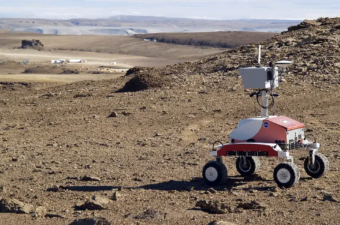
Devon Island in Nunavut, Canada, has emerged as one of the most important Earth-based sites for Mars research. Its barren landscape, extreme cold, and polar desert conditions make it a close analogue to the Martian surface. Scientists use the island to test rovers, drones, drilling systems, and life-support technologies before they are sent to space missions.
Why Devon Island Matters
Devon Island is the world’s largest uninhabited island. It has no permanent population and very limited access. The island’s harsh environment closely resembles conditions on Mars. The absence of vegetation, low temperatures, and dry terrain help researchers study how equipment and humans may function in such settings.
Haughton Crater and Martian Similarities
A major feature of the island is the Haughton Impact Crater, a 20-kilometre-wide crater formed by an ancient impact. Its shape and geology are similar to impact craters on Mars. The island also contains underground ice and dried lakebeds, which are useful for studying where water may once have existed on Mars.
Testing Future Human Survival
NASA and other research teams use Devon Island to test next-generation Mars technologies. These include:
- Pressurised analogue rovers.
- Autonomous drones.
- Deep-drilling systems for ice detection.
- Greenhouse experiments for growing plants in Mars-like soil.
The site also helps scientists understand how astronauts may cope with isolation, confinement, and life-support challenges during long-duration missions.
Astrobiology and Search for Life
Devon Island is also important for astrobiology. Researchers study microorganisms that survive in extreme conditions by living inside rocks, a process known as endolithic colonisation. These findings help scientists identify possible signs of past or present life on Mars and improve future planetary exploration strategies.
Last Modified: April 28, 2026