
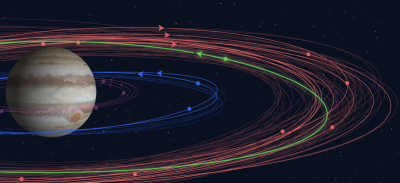
The Minor Planet Centre has announced the discovery of 15 new moons in the outer solar system, including four orbiting Jupiter and 11 orbiting Saturn. The finding marks the continuing role of ground-based astronomy in expanding knowledge of planetary systems. The Centre is the world’s main repository for observations of small bodies in the solar system and is responsible for verifying new discoveries and assigning official designations.
Discovery Around Jupiter and Saturn
The four Jovian moons were identified by astronomers Scott Sheppard and David Tholen. The 11 Saturnian moons were discovered by a team led by Edward Ashton in Taiwan. These additions increase the known moon count of the two giant planets and provide more data on the formation and evolution of their satellite systems.
Role of the Minor Planet Centre
The Minor Planet Centre is based in Cambridge, Massachusetts, and operates under the Smithsonian Astrophysical Observatory with the International Astronomical Union. It receives observational data from astronomers across the world, checks the measurements, and calculates orbital paths. If the object is confirmed as new, the Centre assigns it an official designation.
Importance for Solar System Tracking
The Centre plays a major role in monitoring asteroids, comets, and moons of the outer planets. Its database helps scientists track near-Earth objects, or NEOs, which are space rocks that may pose a threat to Earth. With support from NASA’s Planetary Defense Coordination Office, it helps predict close approaches and possible risks.
Global Scientific Coordination
The MPC also publishes electronic circulars to alert researchers about new discoveries and notable celestial events. These updates help observatories coordinate observations quickly and improve the global exchange of astronomical data.
Last Modified: April 29, 2026