
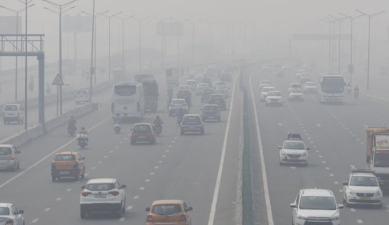
Delhi has begun a science-based study to assess whether smog-eating photocatalytic coatings can help reduce air pollution on roads, pavements, tiles, buildings and other urban surfaces. The six-month project, led by IIT Madras and funded by the Delhi government, will first use laboratory simulations before moving to field trials in the Capital. The focus is on titanium dioxide (TiO₂)-based materials that can react under sunlight and break down pollutants such as nitrogen dioxide (NO₂) and volatile organic compounds (VOCs).
What the Project Will Test
The study will examine whether TiO₂ can be mixed into concrete and asphalt, applied as surface coatings, or used in panels mounted on rooftops and streetlights. Researchers will evaluate how quickly these surfaces can reduce pollutant levels under different lighting conditions, including full sunlight, reduced sunlight and street lighting.
How the Technology Works
TiO₂ is a photocatalytic material. When sunlight falls on it, electrons are generated on the surface. These electrons react with pollutants and help convert them into simpler substances, such as nitrogen and oxygen. The process does not produce electricity. Instead, it drives chemical reactions that dismantle air pollutants.
Why Delhi Needs Such Solutions
Delhi faces severe urban air pollution, especially from traffic and other emission sources. The study aims to create a controlled smog environment using real Delhi data on traffic and pollution levels. This will help researchers test the material under conditions similar to the city’s actual air. The project also recognises that smog, dust and wind can affect performance in open environments.
Limits and Practical Challenges
The technology is being viewed as a supporting measure, not a replacement for existing pollution-control steps. Researchers say the material is stable and relatively inexpensive, but its effectiveness will depend on concentration, maintenance and exposure to light. Dust may reduce performance, so periodic cleaning may be needed. The final goal is to identify affordable and scalable applications for cleaner urban infrastructure.
Last Modified: April 29, 2026