
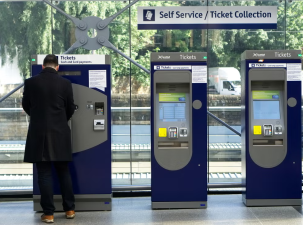
The South Central Railway zone of Indian Railways introduced two artificial intelligence-powered passenger information kiosks named Bholu Mini and Bholu Max on 1 May 2026. Deployed on a pilot basis at the Malkajgiri and Kacheguda railway stations within the Hyderabad division, these digital assistants represent an operational shift toward smart terminal management. The systems automate real-time informational transit queries to reduce seasonal public crowding around manual help desks. Developed entirely through internal engineering talent, this initiative incorporates conversational natural language processing models to handle decentralized public queries across diverse linguistic demographics.
Technical Architecture and Deployment Models
The kiosks function as dynamic points of interest configured to stream accurate operational metrics directly from central databases.
In-House Development Cycle
The underlying software programming, natural language model tuning, and hardware integration were completed by Dr. Anirudh Pamar, Senior Divisional Commercial Manager of the Hyderabad Division. This institutional approach bypasses the reliance on external technical consultants, reducing procurement costs and enabling rapid updates based on real-time station diagnostics.
Bholu Mini Specifications
Deployed at the Malkajgiri railway station, Bholu Mini is engineered as a low-cost, compact utility point. It runs continuously and functions using an automated voice-activation system triggered when a user says “Hello.” It focuses on assisting local commuters by operating primarily in the Telugu language. The conversational engine translates local vocal inputs to deliver instant audio-visual output concerning local platform assignments and basic station amenities.
Bholu Max Specifications
Positioned at the Kacheguda terminal, Bholu Max handles higher commuter traffic volumes through an expanded 21-inch interactive layout. This station variant pairs its voice-recognition layer with a physical touchscreen panel. To maintain utility during regional network blackouts, it retains an offline database cache alongside its live connections.
Comparative Matrix of the AI Information Assistants
| Technical Parameter | Bholu Mini | Bholu Max |
| Primary Test Location | Malkajgiri Railway Station | Kacheguda Railway Station |
| Interface Medium | Voice-activated only (Hands-free) | Hybrid (Voice and Touchscreen) |
| Display Form Factor | Compact, low-footprint module | 21-inch high-definition kiosk |
| Linguistic Coverage | Monolingual emphasis (Telugu) | Multilingual support (12 Indian languages) |
| Core Functions | Basic schedule tracking, platform locations, station layouts | Real-time train telemetry, route mapping, offline inquiries |
| Deployment Strategy | Cost-sensitive local/suburban hubs | Major multi-state junction terminals |
Operational Context and Administrative Scope
The introduction of automated kiosks updates the existing informational framework across Indian Railways terminals.
Integration with Existing Passenger Amenities
The AI-enabled modules work alongside traditional communication systems. They act as a specialized layer to filter simple queries before they reach manual enquiry counters, public address systems, and mobile applications like NTES (National Train Enquiry System). The pilot program checks if conversational interfaces can reduce lines at traditional physical booths.
Jurisdictional Boundaries of South Central Railway
The deployment area belongs to the Hyderabad Division, one of the constituent administrative zones of the South Central Railway (SCR). Headquartered at Secunderabad, the SCR network spans complex geographical limits across Telangana, Andhra Pradesh, Maharashtra, and Karnataka. This regional complexity makes multilingual tools like Bholu Max necessary to manage mixed commuter flows.
IASPOINT Booster Facts for UPSC
- Bhashini AI Ecosystem: The multilingual features of Bholu Max align with India’s National Language Translation Mission (NLTM) called Digital India Bhashini. This program creates open-source language datasets and AI translation tools to help deliver digital services in scheduled Indian languages.
- Official Mascot ‘Bholu’: The kiosks take their name from Bholu, the Guard Elephant, the official mascot of Indian Railways. Created in 2002 to mark the 150th anniversary of rail transport in India, the mascot shows an elephant holding a green signaling lamp.
- Zonal Railway Structure: Indian Railways operates under a functional grid divided into 19 distinct zones (including Kolkata Metro and the South Coast Railway Zone). Each zone is led by a General Manager reporting to the Railway Board.
- Constitutional Language Provisions: The 12 regional tongues programmed into Bholu Max are drawn from the Eighth Schedule of the Constitution of India, which recognizes 22 official languages under Article 344(1) and Article 351.