
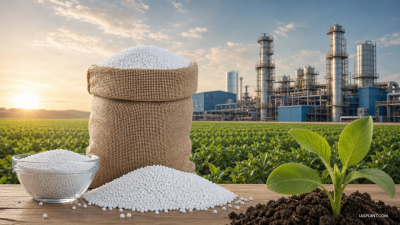
The Cabinet Committee on Economic Affairs approved the National Investment Policy for Urea-2026 on 15 July 2026. NIPU-2026 targets addition of 10 million tonnes of domestic urea capacity through 8–9 natural gas‑based plants and offers a Return on Equity band of 12–16% to attract public and private investment.
What is the issue?
India operates 33 urea manufacturing units with a reassessed installed capacity of 26.94 million tonnes. Annual requirement is roughly 40 million tonnes; domestic production is about 30 million tonnes and imports fill a gap of ~10 million tonnes. NIPU-2026 aims to add 10 million tonnes capacity, improve investment viability and reduce import dependence while separating fixed and variable costs and mitigating foreign‑exchange risk.
Why it matters
- Economic stability: Reduces recurring LNG import bills and foreign‑exchange outflows linked to urea imports.
- Food security: Secures fertiliser availability for cropping seasons and supply chains.
- Fiscal management: Affects subsidy outlays and contingent liabilities of the state.
- Environment and soil health: Increased urea availability risks reinforcing imbalanced nutrient use unless policy measures accompany capacity expansion.
Key design features of NIPU‑2026
- Capacity target: Add 10 million tonnes (1 crore metric tonnes) via 8–9 new natural gas‑based plants.
- Investment incentive: Return on Equity (RoE) band: 12% (floor) to 16% (ceiling).
- Cost transparency: Explicit separation of fixed and variable costs in pricing.
- FX mitigation: Fixed costs to be converted to INR after four years at prevailing exchange rates.
- Fiscal efficiency: Design estimated to save >₹250 crore per plant versus previous policy structures.
Policy governance and investor risk mitigation
NIPU‑2026 fills the investment vacuum after the expiry of the New Investment Policy (NIP)‑2012 in 2019. It introduces a clearer risk‑sharing mechanics: guaranteed RoE reduces investor return uncertainty; cost separation improves tariff‑like transparency; and FX conversion of fixed costs reduces currency risk for capital servicing. The Department of Fertilisers will need clear standard contracts, monitoring and dispute resolution to limit contingent fiscal exposure.
Comparison: NIP‑2012 versus NIPU‑2026
| Dimension | NIP‑2012 | NIPU‑2026 |
|---|---|---|
| Investment window | Provided; expired Oct 2019 | New window; targets 10 Mt capacity |
| Units established | Six new units (4 PSU JVs, 2 private) | Framework for 8–9 new gas‑based plants |
| Return guarantee | Ad hoc mechanisms | RoE band 12–16% |
| Cost & FX treatment | Less explicit | Fixed/variable separation; FX conversion after 4 years |
Economic and fiscal implications
Import substitution of ~10 Mt reduces LNG and urea imports, lowering direct forex outflow and import exposure. Savings per plant (>₹250 crore) and aggregate reductions can relieve pressure on the fertiliser subsidy but depend on global gas prices. Guaranteed RoE improves private capital flow but creates contingent fiscal obligations if market realisation is poor. Fiscal design must link subsidy transfers to performance and cost benchmarks to avoid open‑ended liabilities.
Feedstock, energy security and technology choices
- Natural gas dependence: Modern urea plants use natural gas as feedstock; domestic gas allocation and LNG imports determine variable costs.
- Coal gasification pathway: Policy allows gradual integration of coal gasification to use domestic coal. This reduces import reliance but raises capital costs, technical complexity and higher CO2 emissions per tonne of urea.
- Low‑carbon alternatives: Green ammonia (renewable hydrogen) and carbon capture for existing plants are long‑term options but require demonstration projects and subsidies or carbon pricing to be commercially viable.
Agronomic and environmental risks
Urea remains the most consumed nitrogenous fertiliser. Easier availability and subsidised pricing risk perpetuating over‑application, worsening the N:P:K imbalance and degrading soil organic matter. Consequences include declining crop response, nitrate leaching, groundwater contamination and higher nitrous oxide emissions. Policy must disincentivise indiscriminate urea use through linked measures.
Policy measures to align production with sustainable use
- Nutrient policy integration: Link capacity expansion with nutrient stewardship—promote balanced fertiliser use via extension, soil testing and targeted subsidies.
- Subsidy reform: Consider rationalising urea subsidy architecture—shift from product‑based to outcome‑based transfers, expand Nutrient Based Subsidy instruments or pilot direct benefit transfers where administrative conditions permit.
- Technology push: Support R&D and commercialisation of nano‑urea, green ammonia and coal gasification at scale with environmental safeguards.
- Gas allocation and market design: Ensure priority domestic gas allocation to fertiliser units, transparent gas pooling and long‑term supply contracts to stabilise variable costs.
- Environmental safeguards: Require emissions control, effluent norms and carbon management plans for new plants, and mandatory soil health plans in adjoining command areas.
Operational and institutional considerations
Effective implementation needs clear contractual templates, capacity for project appraisal within the Department of Fertilisers, coordination with the Ministry of Petroleum for gas allocation, and fiscal oversight from the Department of Expenditure. Public sector enterprises and private investors should be subject to comparable regulatory and environmental conditions. Monitoring must track capacity utilisation, subsidy flows, and agronomic outcomes.
Model Questions
1. Analyse the fiscal and economic implications of the National Investment Policy for Urea‑2026 in advancing self‑reliance in India’s fertiliser sector. [GS-III: Economic Development]
NIPU‑2026 reduces import dependence by targeting 10 Mt additional capacity and can lower forex outflows and import vulnerability. Estimated savings (>₹250 crore per plant) improve cost efficiency. Guaranteed RoE attracts private capital but creates contingent fiscal obligations via subsidies or off‑take guarantees. Net fiscal outcome depends on gas prices, gas allocation, subsidy design, and performance‑linked transfers to avoid open‑ended public liabilities.
2. Examine the structural and regulatory improvements in NIPU‑2026 over the previous policy and assess how it addresses investor and market risks. [GS-II: Governance]
NIPU‑2026 replaces a policy gap since 2019 with explicit RoE (12–16%), separation of fixed/variable costs and FX conversion after four years. These measures reduce return uncertainty, improve price transparency and limit currency risk. Effective risk mitigation requires standard contracts, transparent cost audits and institutional capacity to monitor compliance, thereby making private participation viable while containing fiscal exposure.
3. Evaluate the technological and environmental feasibility of integrating coal gasification alongside natural gas under NIPU‑2026. [GS-III: Science & Technology]
Coal gasification can use domestic coal and reduce LNG dependence but demands high capex, complex technology and yields higher CO2 intensity than gas‑based routes. Commercial viability needs scale, assured coal quality, emissions controls and possibly carbon capture. Policy support, demonstration projects and cost‑sharing will be required; environmental costs and India’s climate commitments make coal gasification a contested transitional option.
4. Critically discuss how expanding domestic urea production may affect soil health and suggest policy measures to prevent negative agronomic outcomes. [GS-III: Environment & DM]
Greater urea availability risks reinforcing N‑centric fertilisation and worsening NPK imbalance, lowering soil fertility and causing nitrate pollution. Preventive measures include linking capacity expansion to soil testing, promoting balanced fertiliser mixes and nano‑urea, reforming subsidy to reward nutrient‑efficient practices, strengthening extension services and enforcing integrated nutrient management to align production with sustainable agronomic outcomes.
Last Modified: July 16, 2026