
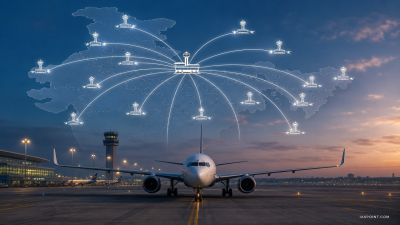
The Central Government is implementing a Hub‑and‑Spoke civil aviation network of 44 airports (4 hubs and 40 spokes) to link Tier‑II and Tier‑III cities with international routes via major hubs. Delhi is the primary hub; Varanasi and Amritsar are the first active spokes under Air India’s Easy Connect. Ahmedabad, Goa and Kochi are next in the roll‑out, while Vision 2047 targets 100 airports and 200 heliports.
What is the current plan
India’s Hub‑and‑Spoke network comprises 4 hub airports and 40 spokes. Delhi has been designated the primary hub. Varanasi and Amritsar are the first two active spokes using Air India’s Easy Connect system, which allows through check‑in, baggage transfer and immigration at the origin spoke. Air India began outbound Easy Connect services from Varanasi and from Amritsar, linking passengers to 27 international destinations via Delhi.
Why this matters
- Economic: Retains transit revenue domestically, improves aircraft utilisation and reduces unit costs on long‑haul routes.
- Governance: Requires new administrative workflows for immigration, customs and security at regional airports.
- Regional development: Direct international links stimulate tourism, exports and investment in non‑metro cities.
- Security & compliance: Demands standardised immigration and baggage controls across multiple airports.
- International relations: Reduces dependence on foreign transfer hubs and supports India’s aviation diplomacy.
Operational framework
Easy Connect: Outbound passengers at spoke airports complete check‑in, baggage drop and immigration locally. Baggage and terminal changes are handled at the hub without passenger re‑check. Inbound Easy Connect at spokes is being phased; Amritsar inbound integration is expected within weeks. Network design: Hubs concentrate long‑haul operations while spokes provide regional feed. Scheduling must ensure tight but reliable transfer windows to maintain connectivity.
Economic and strategic implications
- Aviation sovereignty: Centralising transfer traffic at domestic hubs keeps transit fare and handling revenue within India and reduces funneling through foreign hubs.
- Cost and efficiency: Consolidation raises load factors on international sectors, improves yield management and can lower fares for regional travellers.
- Competitive effects: Domestic carriers gain bargaining power on international routes, but slot and capacity limits at hubs may constrain benefits.
Governance and institutional challenges
- Inter‑ministerial coordination: Ministry of Civil Aviation, Bureau of Immigration (Ministry of Home Affairs), Customs (Ministry of Finance), AAI and airlines must align procedures and staffing.
- Legal and procedural changes: Standard operating procedures for through baggage, immigration stamping, and pre‑clearance require formalisation and training.
- Technology integration: Passenger data, baggage tracking (RFID/barcode) and customs clearance systems must interoperate across spokes and hubs.
- Human resources: Deployment of trained immigration/customs/security staff at spoke airports is necessary to meet international standards.
Federal and regional dimensions
State role: Land acquisition, road connectivity, utilities and local clearances are state responsibilities. Centre‑state cooperation is essential for timely airport upgrades and ancillary infrastructure. Regional development: Cities like Varanasi and Amritsar benefit via higher tourist footfall, faster cargo movement for perishables and handicrafts, and new service sector employment.
Infrastructure targets, financing and institutions
- Vision 2047 alignment: Government plans 100 airports and 200 heliports in the next decade to expand the network.
- Investment model: A mix of public funding, PPPs and airline participation will be required. AAI, state governments and private investors will share roles.
- Connectivity: Integrate airport planning with PM‑Gati‑Shakti corridors, rail and road projects to widen catchment areas of spokes.
Key implementation challenges
| Dimension | Challenge | Immediate action |
|---|---|---|
| Hub capacity | Slot constraints, terminal congestion at Delhi | Prioritised slot allocation, planned terminal expansion |
| Security & procedures | Ensuring international‑standard immigration and customs at spokes | Deploy BI and customs teams; SOPs and audits |
| Technology | Interoperability of passenger and baggage systems | National data‑sharing protocol; common tracking standards |
| Manpower | Shortage of trained officers at regional airports | Dedicated recruitment/training pool; rotational postings |
| Federal coordination | Land and local approvals delay projects | Central‑state project cells; time‑bound clearances |
Policy recommendations and way forward
- Phased capacity upgrades: Expand hub terminals and optimise slot management before rapid spoke scaling.
- Dedicated staffing model: Create a fast‑deploy cadre for immigration and customs at spokes with standardised training.
- Open network to multiple carriers: Allow other airlines to offer through‑check services to increase competition and route choices.
- IT and tracking standards: Mandate interoperable passenger and baggage tracking systems (common API, RFID standards).
- Finance and PPP: Use viability gap funding and concessional financing for regional airports; involve state governments in revenue sharing.
- Intermodal integration: Link spokes with express rail and robust road networks to expand catchment and reduce first‑mile constraints.
- Environmental and community measures: Early environmental clearances, noise mitigation and community engagement to reduce project delays.
Model Questions
1. Examine how India’s Hub‑and‑Spoke civil aviation model can enhance ‘aviation sovereignty’ and its economic implications for carriers and regional economies. [GS-III: Economic Development]
India’s model retains transit revenue domestically, improves aircraft utilisation and raises load factors on international sectors. Benefits include lower unit costs, potential fare reduction for regional passengers, and strengthened negotiating position for domestic carriers. Risks include hub congestion, slot scarcity and need for capital investment. Success requires hub capacity expansion, interoperable IT, and regulatory support to enable efficient feed‑and‑connect operations.
2. Discuss the governance and institutional challenges in implementing through check‑in, immigration and customs at regional spoke airports and suggest administrative measures. [GS-II: Governance]
Challenges: inter‑ministerial coordination, deployment of Bureau of Immigration and customs officers, security upgrades, SOPs and IT integration. Measures: establish joint centre‑state project cells, create a fast‑deploy immigration/customs cadre, mandate interoperable passenger/baggage systems, issue standard operating procedures, and conduct pilot audits. Time‑bound staffing and training will ensure operational reliability at spokes.
3. How does integrating Tier‑II and Tier‑III cities into international air networks via the Hub‑and‑Spoke model catalyse regional economic growth and tourism? Illustrate with examples. [GS-III: Economic Development]
Direct international links reduce travel time and cost, boosting tourist arrivals, hospitality and local services. Cities like Varanasi and Amritsar gain higher pilgrimage and cultural tourism, faster export of perishables and handicrafts, and increased investment in logistics. Multiplier effects include job creation, urban infrastructure upgrades and wider economic dispersal away from metros, improving regional incomes and market access.
4. Analyse federal challenges in developing 100 airports and 200 heliports under Vision 2047 alongside the Hub‑and‑Spoke model, and recommend cooperative frameworks. [GS-II: Governance]
Federal challenges: land acquisition, local clearances, environmental permissions and state funding. Recommendations: central‑state project cells with time‑bound approvals, revenue‑sharing PPP models, conditional central grants for state commitments, AAI‑led technical assistance, and unified monitoring dashboards. Integrating airport plans with national connectivity programmes will reduce delays and align investments across jurisdictions.
Last Modified: July 28, 2026