
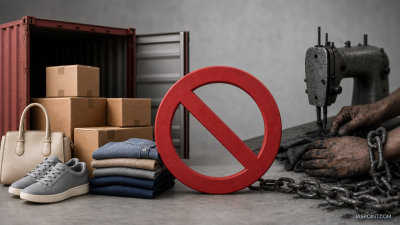
On 13 July 2026 the DGFT issued a gazette notification inserting Paragraphs 2.20B and 11.64 into the Foreign Trade Policy, 2023, banning imports of goods produced wholly or partly using forced labour; the rule takes effect 30 days after gazette publication.
What is current
The Directorate General of Foreign Trade (DGFT) may investigate allegations that imported goods were produced with forced labour and recommend prohibition. The FTP adopts the ILO Forced Labour Convention (No.29) definition. The measure creates the first Indian import restriction explicitly linked to forced labour.
Why it matters
- Governance: Establishes a trade‑border tool to address human‑rights violations in global supply chains.
- Economy: Protects exporters from trade retaliation and aligns Indian trade with buyer countries’ ESG requirements; raises compliance costs for importers.
- Society and Rights: Advances constitutional prohibition of forced labour and global labour standards.
- International relations: Operates within a geopolitical context that includes a US Section 301 probe and possible tariffs on trading partners.
Legal and constitutional framework
Article 23 of the Constitution outlaws forced labour. The Bonded Labour System (Abolition) Act, 1976, is the primary domestic criminal statute against bonded labour. The FTP amendment adds Paragraph 11.64 to define forced labour using the ILO Convention No.29 formulation and Paragraph 2.20B to create a statutory path for import restrictions. DGFT actions will follow the Handbook of Procedures, 2023.
Institutional and procedural design
- Authority: DGFT under the Ministry of Commerce and Industry conducts inquiries.
- Trigger: Investigations may start on credible complaints or suo motu findings.
- Outcome: DGFT can recommend separate notifications to prohibit specific imports where evidence suffices.
- Procedures: Inquiry methods, evidence thresholds and timelines are to be framed in the Handbook of Procedures.
Enforcement and evidentiary issues
Investigations will require cross‑border evidence, supplier declarations, audit reports, certifications and possibly on‑site verification. Clear, published criteria for what constitutes “credible evidence” are necessary to ensure due process, judicial reviewability and non‑discrimination. Administrative capacity and international cooperation will determine enforcement quality and speed.
Economic and supply‑chain implications
- Market access: Demonstrable compliance may improve access to Western markets and mitigate the risk of additional tariffs such as those proposed under the US Section 301 process.
- Compliance costs: Due diligence, audit fees and certification add costs to importers and firms relying on intermediate goods.
- Input risk: Restrictions on low‑cost inputs could raise domestic manufacturing costs and require supply‑chain restructuring.
- Competitive effect: Exporters with compliant supply chains gain advantage; non‑compliant suppliers risk exclusion.
Geopolitical context
The DGFT measure functions amid the US USTR’s Section 301 inquiry into forced labour practices across multiple economies and a proposed tariff regime for partners lacking trade‑linked controls. India’s step is partly defensive: it reduces grounds for unilateral tariff measures against Indian exports. At the same time, unilateral import bans carry a risk of diplomatic friction and potential WTO scrutiny if applied discriminatorily.
Ethical and legal questions
Trade‑linked labour restrictions operationalise India’s constitutional ban on forced labour and align trade policy with human‑rights norms. Ethical risks include misuse as non‑tariff protection. To be defensible India must apply non‑discriminatory standards, provide transparent procedures, ensure remedies for affected workers, and couple trade measures with technical support to improve labour conditions in supply chains.
Implementation challenges
- Traceability: Multi‑tier supply chains make verification complex, especially for raw materials and sub‑contracted stages.
- Institutional capacity: DGFT needs specialised investigators, legal expertise and coordination with labour authorities.
- Evidence gathering: Cross‑border audits and supplier cooperation are often difficult; third‑party verification standards vary.
- Trade friction: Affected exporters or supplier countries may challenge measures at WTO or through diplomatic channels.
Way forward: operational priorities
- Procedural clarity: Publish objective evidentiary standards and timelines in the Handbook of Procedures to ensure predictability and legal defensibility.
- Capacity building: Create a dedicated labour‑compliance cell within DGFT with trained investigators and legal staff.
- Inter‑agency coordination: Link DGFT work with the Ministry of Labour and Employment, NHRC and Ministry of External Affairs for evidence, remediation and diplomacy.
- Support for exporters: Provide technical assistance, certification subsidies and supply‑chain mapping support to help firms comply.
- Multilateral engagement: Pursue common standards at ILO and WTO to prevent fragmented, protectionist outcomes.
- Proportionate measures: Use temporary suspensions, corrective action plans and targeted prohibitions rather than blanket bans where remediation is possible.
Model Questions
1. Analyse the economic and trade implications of India’s ban on importing goods made using forced labour, particularly in the context of global supply‑chain standards and unilateral actions by partners such as the United States. [GS-III: Economic Development]
India’s ban reduces exposure to punitive tariffs and aligns exports with buyer market ESG expectations, improving market access for compliant firms. It imposes compliance costs for due diligence, audits and possible supplier shifts, raising input prices for some manufacturers. Net impact depends on DGFT’s investigative efficiency, firms’ ability to trace multi‑tier suppliers and availability of alternative suppliers or domestic substitutes.
2. Discuss the regulatory and institutional mechanism established under the revised Foreign Trade Policy, 2023 to restrict imports tied to forced labour. How does it align with India’s international and domestic legal commitments? [GS-II: Governance]
The FTP amendments (Paragraphs 2.20B and 11.64) empower DGFT to investigate and recommend import prohibitions, adopting the ILO No.29 definition. The measure complements domestic law (Article 23 and the Bonded Labour Act) and uses the Handbook of Procedures for process rules. Alignment with international commitments is through ILO definition; procedural transparency and inter‑agency coherence are needed to ensure legal validity and non‑discrimination.
3. From an ethical perspective, evaluate trade restrictions based on labour standards. To what extent do such policies address moral hazards of globalised production? [GS-IV: Ethics, Integrity and Aptitude]
Trade restrictions based on labour standards address exploitation by removing market incentives for forced labour and uphold human dignity. They do not eliminate root causes alone; risks include selective enforcement and disguised protectionism. Ethical policy requires objective evidence, remedy mechanisms for victims, capacity support for suppliers, and non‑discriminatory application so that measures prioritise worker welfare over commercial advantage.
4. Assess the geopolitical drivers behind India’s trade policy adjustment in response to international investigations such as the US Section 301 probe. What strategy should India adopt to balance economic interests with global regulatory compliance? [GS-II: International Relations]
The measure is partly defensive against US Section 301 tariff threats and aims to reduce friction. India should adopt transparent, non‑discriminatory inquiry procedures; engage the US and other partners diplomatically; coordinate with developing countries at ILO/WTO for common rules; and support exporters via compliance assistance. Legal preparedness for WTO challenges and emphasis on multilateral standard‑setting will balance trade interests and regulatory obligations.
Last Modified: July 15, 2026