
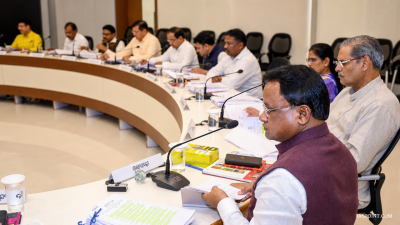
The Odisha Cabinet recently approved a proposal to introduce a new agricultural marketing law that would repeal the Odisha Agricultural Produce Markets (OAPM) Act, 1956. The draft aligns with the Union Government’s Model Agricultural Produce and Livestock Marketing Act, 2017 and proposes a single unified state market, electronic trading, single trading licence and market sub-yards; it is cabinet-approved and pending legislative enactment.
What is the change?
The draft law removes geographical restrictions on the sale and purchase of agricultural produce and livestock within Odisha. Key features:
- Single unified market: entire state functions as one market to allow free intra-state trade.
- Alternate trading channels: direct marketing, e-trading and electronic auctions are legally permitted.
- Unified fees and licence: single-point levy of market fees and a state-wide single trading licence for traders.
- Market sub-yards: warehouses, cold storages and silos may be notified as sub-yards for trading.
Why it matters
The draft affects governance, economy, rural livelihoods, infrastructure and technology adoption. It has potential to widen market access for farmers, reduce handling and transport losses, attract private investment in storage and logistics, simplify trader compliance, and enable digital price discovery. The change also alters revenue flows and administrative roles of market committees.
Constitutional and federal dimensions
Agriculture and markets fall under the State List. The Union Government issued a Model Act in 2017 to encourage market reforms; states adopt or adapt it voluntarily. The Odisha draft is an instance of the Centre providing a template while the state exercises legislative authority. The proposal raises issues of state regulatory autonomy, revenue allocation between market bodies and the state, and coordination with national digital platforms.
Key provisions (operational implications)
- Trading mobility: Traders can operate across the state under one licence, reducing multiple registrations and entry barriers.
- Fee rationalisation: Single-point levy reduces cascading market fees and lowers transaction costs for buyers and sellers.
- Decentralised trade locations: Declaring storage units as sub-yards permits trading near production centres and shortens supply chains.
- Digital market infrastructure: Legal cover for e-trading and e-auctions enables integration with national platforms such as e-NAM and private exchanges.
| Dimension | OAPM Act, 1956 | Proposed law (draft) |
|---|---|---|
| Market area | Multiple notified market yards with geographical limits | State treated as a single unified market |
| Trading modes | Primarily physical mandi trade through market committees | Direct marketing, e-trading, e-auctions, sub-yard trading |
| Licensing & fees | Multiple local licences; yard-wise fees | Single trading licence; single-point levy |
| Infrastructure | Mandis as primary trading nodes | Warehouses, cold storages, silos can be notified as sub-yards |
Economic and infrastructure implications
- Price discovery: Wider buyer base and e-auctions can reduce local collusion and improve prices for farmers.
- Post-harvest loss reduction: Trade from cold storages and silos reduces transit and handling for perishables.
- Private investment: Recognising private storage as sub-yards incentivises cold-chain and warehouse investment under PPP or private models.
- Transaction costs: Unified fees and licence lower administrative and tax friction that increases marketing margins.
- APMC impact: Market committees face revenue and role reassessment; funds and maintenance models need redesign.
Technology and market mechanisms
- Electronic auctions and e-trading: Digital bidding platforms enable transparent price discovery and extend market reach to remote producers.
- Quality assurance: Electronic trade requires assaying, standardised grading and certification at sub-yards or nearby labs.
- Payment and finance: Integration with electronic payment, immediate settlement and warehouse receipt financing will be essential for farmer cash flow.
- Platform integration: Legal acceptance of e-trading allows linkage to e-NAM and private marketplaces, broadening buyer-seller networks.
Implementation challenges
- Stakeholder resistance: Commission agents and APMC functionaries may oppose changes that reduce traditional fees.
- Revenue transition: Market committees may lose fee income; a transition plan for mandi upkeep is required.
- Capacity gaps: Shortage of assaying labs, grading facilities and cold-chain nodes can limit electronic trade uptake.
- Digital inclusion: Smallholders need access to devices, connectivity and training to use e-platforms effectively.
- Regulatory oversight: New dispute resolution, licence monitoring and data governance mechanisms are necessary.
Way forward (policy measures)
- Phased rollout: Pilot e-trading and sub-yard notifications in high-production districts before statewide scaling.
- Grading and assaying network: Fund decentralised labs and mobile testing units to ensure commodity standards for e-auctions.
- Revenue re-design: Compensatory mechanisms or central grants to maintain mandi infrastructure during transition.
- Public–private partnerships: Use PPP for cold chains, warehouses and logistics hubs with clear service and tariff rules.
- Financial integration: Link digital trading platforms with immediate electronic payments, warehouse receipt financing and short-term credit.
- Capacity building: Train farmers, mandi staff and traders in digital platforms, grading and contract terms.
- Regulatory framework: Establish clear grievance redressal, price reporting norms and data transparency rules for electronic markets.
Model Questions
1. Examine how a single unified agricultural market in Odisha can address traditional bottlenecks in the supply chain and improve price discovery for farmers. [GS-III: Economic Development]
A single unified market removes locality-based trade restrictions, widening buyer access and reducing local monopolies. E-auctions and e-trading enable transparent bidding and real-time price discovery. Declaring warehouses and cold storages as sub-yards reduces handling and transit losses. Unified licence and single-point levy lower transaction costs. Complementary measures—grading labs, digital payments and warehouse receipt finance—are needed to ensure smallholders benefit.
2. Discuss the federal and constitutional dimensions of states aligning their laws with the Model Agricultural Produce and Livestock Marketing Act, 2017. [GS-II: Governance]
Agriculture and markets are state subjects; states have legislative authority to regulate them. The Model Act is a Centre-issued template that states may adopt voluntarily. Alignment reflects coordination between levels of government but preserves state autonomy over details like fees and enforcement. Effective adoption requires inter-governmental coordination on digital platforms, revenue transition support and legal harmonisation to avoid regulatory gaps.
3. Analyse the role of private investment and logistics infrastructure modernisation under the proposed Odisha marketing framework. [GS-III: Economic Development]
Recognising private warehouses and cold storages as market sub-yards attracts investment in storage and cold chains. Private capital can fill infrastructure gaps faster than public funds, reduce post-harvest losses and enable direct trade from production centres. Clear regulatory terms, tariff rules and PPP contracts are necessary to ensure service quality, avoid exploitation, and integrate facilities with assaying, grading and digital trading systems.
4. Evaluate how electronic trading and digital price-discovery mechanisms can benefit small and marginal farmers and what safeguards are required. [GS-III: Economic Development]
Electronic trading widens the buyer base and reduces opaque local price-setting, improving returns for smallholders. Real-time prices enable informed sale decisions. Safeguards include decentralised assaying and grading, digital literacy and access, immediate electronic payments, low-cost mobile connectivity, and grievance mechanisms. Linking platforms to credit and warehouse receipt finance ensures farmers can hold produce for better prices without liquidity constraints.
Last Modified: July 15, 2026