
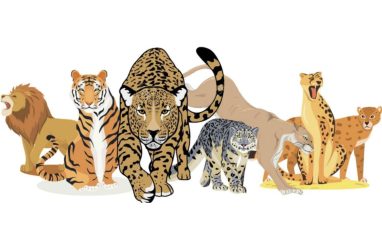
India will host the inaugural International Big Cat Alliance (IBCA) Summit in New Delhi on 1-2 June 2026 at Bharat Mandapam. Initiated under the leadership of Prime Minister Narendra Modi, this inter-governmental organization is headquartered in India. The event brings together heads of state, policymakers, scientists, and conservation experts from member nations and observer countries. The summit is guided by the theme “Save Big Cats, Save Humanity, Save Ecosystem” and intends to adopt the Delhi Declaration. This declaration will establish the first global transboundary framework focused exclusively on the protection of seven major big cat species and their natural habitats.
Overview of the International Big Cat Alliance
The IBCA is a dedicated multi-country, multi-agency coalition formed to secure the future of large felines.
Genesis and Framework
- Launch: The alliance was launched in April 2023 during the 50th anniversary commemoration of Project Tiger.
- Cabinet Approval: The Union Cabinet gave formal approval for its institutional setup in February 2024.
- Statute and Pattern: The framework of the IBCA agreement is structured largely on the model of the International Solar Alliance (ISA).
- Financial Commitment: India has committed a total budgetary support of ₹150 crore (approximately $100 million) for a five-year period from 2023-24 to 2027-28 to assist with infrastructure, corpus funds, and recurring expenses.
Membership and Structure
- Global Outreach: The alliance targets 95 big cat range countries spanning Asia, Africa, and the Americas. Membership is open to all United Nations member states, including non-range nations interested in conservation.
- Current Status: The alliance has over 25 ratified member countries, including Nepal, Russia, Saudi Arabia, Bangladesh, Bhutan, Kenya, and Malaysia, along with multiple observer states.
- Governance Body: The institutional framework features an Assembly of Members as the apex decision-making body, a Standing Committee, and a Secretariat based in New Delhi.
The Seven Species of the Alliance
The alliance directs its conservation practices towards seven specific big cat species. The biological classification and global conservation status of these species vary across the International Union for Conservation of Nature (IUCN) Red List.
| Common Name | Scientific Name | IUCN Red List Status | Presence in India |
| Tiger | Panthera tigris | Endangered | Yes (Native) |
| Asiatic Lion | Panthera leo persica | Endangered | Yes (Native – Gir Forest) |
| Leopard | Panthera pardus | Vulnerable | Yes (Native) |
| Snow Leopard | Panthera uncia | Vulnerable | Yes (Native – Himalayas) |
| Cheetah | Acinonyx jubatus | Vulnerable | Reintroduced (Kuno National Park) |
| Jaguar | Panthera onca | Near Threatened | No (Americas) |
| Puma | Puma concolor | Least Concern | No (Americas) |
Core Objectives and Functions
The IBCA serves to bridge existing gaps in global wildlife governance through collaborative action.
Species and Habitat Protection
- Populations Recovery: Reversing the decline of big cat populations and securing critical wildlife corridors.
- Habitat Connectivity: Restoring degraded landscapes and securing transboundary habitats to allow safe wildlife movement.
- Climate Mitigation: Utilizing big cat landscapes as nature-based climate solutions, where healthy habitats improve carbon absorption.
Resource Mobilization and Knowledge Sharing
- Central Repository: Creating a centralized platform for technical knowledge, standardized operating procedures, and scientific data.
- Financial and Technical Aid: Delivering financial assistance and capacity-building resources to resource-deficient range countries.
- Synergy with Global Bodies: Coordinating anti-poaching measures and illegal wildlife trade containment in alignment with CITES (Convention on International Trade in Endangered Species) and CMS (Convention on Migratory Species).
India’s Big Cat Conservation Footprint
India is the only nation in the world that naturally hosts or supports five of the seven big cat species covered under the alliance.
National Conservation Models
- Project Tiger: Launched in 1973, it remains a benchmark for species recovery. According to the 2022 estimation, India holds over 3,000 wild tigers, managed by the National Tiger Conservation Authority (NTCA).
- Project Lion: Focused on the Asiatic lion in Gujarat. Targeted interventions have expanded the lion population range across 11 districts, with Barda Wildlife Sanctuary developed as a second habitat.
- Project Cheetah: The world’s first intercontinental large carnivore translocation initiative, bringing African cheetahs to Kuno National Park in Madhya Pradesh after the species was declared extinct in India in 1952.
- Pre-Summit Thematic Events: To prepare for the 2026 Summit, India organized specialized domestic pre-events across states: lion conservation at Sasan Gir, cheetah conservation in Bhopal, leopard conservation in Bhubaneswar, snow leopard conservation in Gangtok, and tiger conservation in Chandrapur.
IASPOINT Booster Facts for UPSC
- Nodal Agency: The National Tiger Conservation Authority (NTCA) acts as the nodal implementation agency for the IBCA within the Ministry of Environment, Forest and Climate Change (MoEFCC).
- Taxonomic Distinction: Out of the seven alliance felines, five belong to the genus Panthera (Tiger, Lion, Jaguar, Leopard, Snow Leopard) and possess the anatomical capability to roar. The Cheetah (Acinonyx jubatus) and Puma (Puma concolor) belong to distinct genera and cannot roar.
- Translocation Diplomacy: India has extended its big cat expertise globally by entering partnerships to translocate tigers to Cambodia and sourcing cheetahs from Namibia and South Africa.
- Delhi Declaration Legal Status: The upcoming declaration aims to be the first international consensus document signed collectively for all seven big cat species simultaneously, focusing heavily on South-South cooperation.