
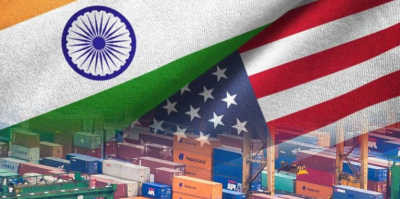
The India-US bilateral trade agreement talks concluded in Washington, D.C., on 22 April 2026 after three days of negotiations. The Indian delegation had 12 members and was led by Darpan Jain, Additional Secretary in the Department of Commerce. The US delegation was led by Brendan Lynch, Assistant USTR for South and Central Asia.
Talks and Negotiating Teams
The bilateral trade agreement framework was announced on 2 February 2026, and the text was released on 7 February 2026. Jamieson Greer, the US Trade Representative, described India as a “tough nut to crack” during the negotiations. The talks covered market access, tariff issues, and commodity-specific trade matters.
Agriculture and Market Access
India has maintained protection for its agricultural markets in trade negotiations. Distillers dried grains, or DDGs, were among the commodities discussed in the talks, and DDGs are used as high-protein livestock feed. India has sought preferential access to US markets under the agreement.
Trade Targets and Legal Context
India and the United States have set a bilateral trade target of USD 500 billion by 2030. The US Supreme Court ruled on 20 February 2026 against reciprocal tariffs imposed under the 1977 International Emergency Economic Powers Act, or IEEPA. That ruling required changes in the trade framework under discussion.
Key Terms
Bilateral trade agreements are treaties or arrangements between two countries that cover goods, services, tariffs, and market access. Reciprocal tariffs are duties imposed by one country in response to tariffs imposed by another country. The IEEPA is a 1977 United States law that gives the President powers during declared national emergencies. The discussions were described by officials from both sides as positive and productive. Most substantive issues were resolved, and only a few loose ends remained.
Last Modified: April 23, 2026