
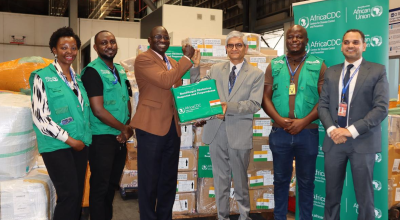
India has dispatched a specialized consignment of emergency pharmaceutical supplies to support the containment of the Bundibugyo Ebola outbreak in the eastern Democratic Republic of Congo. Delivered via the Africa Centres for Disease Control and Prevention’s Eastern Africa Regional Coordinating Centre in Uganda, the medical relief includes critical diagnostics, case management support tools, therapeutics, and advanced infection prevention and control materials. The intervention follows the World Health Organization’s declaration of the multi-country outbreak as a Public Health Emergency of International Concern. This response positions India as a first responder for humanitarian medical crises within the Global South.
Epidemic Profile and the Bundibugyo Strain
The current outbreak is driven by the Bundibugyo virus, a distinct species within the Orthoebolavirus genus. It presents unique clinical challenges due to the complete absence of targeted medical countermeasures.
Taxonomy and Virological Framework
The Ebola virus genus comprises six distinct species, each named after the geographic location of its initial discovery.
- Ebola virus (Zaire ebolavirus): The most common and lethal strain, responsible for the major 2014–2016 West African epidemic.
- Sudan virus (Sudan ebolavirus): Driven by localized outbreaks, most recently causing a severe containment challenge in Uganda.
- Bundibugyo virus (Bundibugyo ebolavirus): First identified in 2007 in the Bundibugyo district of Western Uganda. It has an average case fatality rate ranging from 30% to 50%, making it statistically less lethal than the Zaire strain but harder to manage due to a lack of dedicated tools.
- Reston virus, Taï Forest virus, and Bombali virus: The remaining identified species, with Reston notably being non-pathogenic to humans.
The Treatment Vacuum
Unlike the Zaire strain, which can be managed with approved countermeasures like the Ervebo vaccine and monoclonal antibody treatments (Inmazeb and Ebanga), the Bundibugyo strain has no licensed vaccines or specific antiviral therapies. Management depends entirely on aggressive supportive care, fluid resuscitation, and treating secondary symptomatic infections.
Transmission Dynamics and Clinical Manifestations
The virus operates as a severe viral hemorrhagic fever with zoonotic origins and high potential for healthcare-associated transmission.
Pathogen Spillover and Human Spread
- Zoonotic Reservoir: Fruit bats belonging to the Pteropodidae family are the natural reservoir hosts. Spillover into humans occurs through close handling of infected wildlife carcass or secretions, including non-human primates, forest antelopes, and porcupines.
- Human-to-Human Transmission: The virus spreads via direct contact with broken skin or mucous membranes and the bodily fluids of an infected person. These fluids include blood, feces, vomit, saliva, and semen.
- Fomite Transmission: Indirect transmission occurs via contact with surfaces, bedding, or clothing contaminated with these infectious fluids.
Symptoms and Complications
The incubation period spans from 2 to 21 days. Individuals are not infectious until they manifest active clinical symptoms. [Day 2-9: Dry Phase] -> Sudden fever, intense fatigue, severe muscle pain, headache, sore throat. [Day 10+: Wet Phase] -> Vomiting, diarrhea, impaired kidney/liver function, internal & external bleeding.
Composition of Indian Emergency Aid
The humanitarian shipment targets the structural weak points of the central African field response, prioritizing health worker safety to prevent hospital-acquired transmission amplification.
Diagnostics and Protective Systems
- Real-Time PCR Assays: Molecular diagnostic kits configured to detect the genetic signature of the Bundibugyo strain, reducing the time required for case confirmation.
- Personal Protective Equipment Kits: High-grade fluid-resistant coveralls, double-gloving configurations, and N95 respirators designed to create complete barriers for frontline clinical staff.
- Infection Prevention and Control Supplies: Institutional disinfectants, chemical sanitizers, and safe disposal infrastructure designed to eliminate viral persistence in clinical environments.
Case Management Support
- Supportive Therapeutics: Infusion fluids, electrolyte replenishers, and broad-spectrum antibiotics to manage secondary bacterial infections.
- Symptomatic Management Medications: Antipyretics, antiemetics, and analgesics to stabilize patients during the critical dehydration phases of the illness.
IASPOINT Booster Facts for UPSC
- Public Health Emergency of International Concern Status: The ongoing Bundibugyo Ebola outbreak in the Democratic Republic of Congo and Uganda was formally declared a Public Health Emergency of International Concern by the World Health Organization Director-General under the provisions of the International Health Regulations (2005).
- Vaccine Cross-Protection Limits: World Health Organization emergency guidance indicates that the prequalified Ervebo vaccine, tailored for the Zaire strain, offers inconclusive cross-protection against the Bundibugyo virus, making the deployment of pipeline candidate vaccines under clinical trial protocols necessary.
- Africa CDC Institutional Structure: The Africa Centres for Disease Control and Prevention is an autonomous public health agency of the African Union, headquartered in Addis Ababa, Ethiopia, operating through five Regional Coordinating Centres to manage continental health emergencies.
- First Ebola Discovery: The Ebola virus was discovered in 1976 during two simultaneous outbreaks in Nzara (Sudan) and Yambuku (Democratic Republic of Congo), taking its name from the Ebola River flowing near Yambuku.
- Indian Regulatory Mechanism: External humanitarian pharmaceutical aid from India is coordinated through the Ministry of