
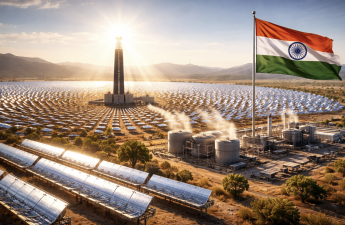
India’s industrial sectors are facing energy challenges due to geopolitical tensions affecting natural gas imports. The conflict near the Strait of Hormuz has disrupted supplies, forcing industries to cut gas usage. This crisis has accelerated interest in alternative heat sources like Concentrated Solar Thermal (CST) technology and electrification of heat. These solutions offer a path to thermal independence and industrial decarbonisation.
Energy Crisis Impact on Indian Industry
Industrial towns like Morbi in Gujarat and Ludhiana in Punjab rely heavily on gas-fired heat for ceramics and textiles. Gas shortages have forced many kilns and boilers to reduce operations. The Ministry of Petroleum has cut gas allocations for non-priority sectors to 65-80%. Rising gas prices have made conventional heating expensive and unreliable.
Concentrated Solar Thermal Technology Explained
CST uses mirrors to focus sunlight onto a receiver, heating fluids to temperatures around 400 °C. This heat can generate steam for industrial processes like textile dyeing or ceramic baking. Unlike solar photovoltaic panels that produce electricity, CST directly produces high-temperature heat. India’s CST potential is around 15 GW, but adoption is low. Rising gas costs have reduced the payback period for CST installations to under three years.
Electrification of Industrial Heat
Electric heating methods like induction and plasma torches offer over 90% efficiency by generating heat inside the material. Morbi’s ceramic units are experimenting with plasma torches to control kiln temperatures precisely. However, switching fully to electric heat demands a strong and stable power grid. India’s current grid and storage infrastructure face challenges in handling the increased load from industrial electrification.
Infrastructure and Policy Challenges
India’s grid needs upgrades to support high electricity demand in industrial clusters. Battery and pumped hydro storage are essential for round-the-clock renewable power. CST’s advantage lies in on-site heat generation and thermal storage, which is cheaper than battery storage. India requires a National Thermal Policy to promote direct heat technologies. Incentives and carbon market reforms can encourage industries to adopt cleaner heat solutions. Hybrid models combining CST, gas backup, and electric heating can ease the transition.
Topics for Prelims:
Concentrated Solar Thermal (CST) Technology
- Uses mirrors to concentrate sunlight for heat generation.
- Heats fluids like water or molten salt up to 400 °C.
- Produces industrial steam without electricity conversion.
- Potential in India estimated at 15 GW.
- Reduces reliance on fossil fuels and lowers emissions.
Industrial Heat and Electrification
- Industrial heat accounts for 25% of India’s energy use.
- Gas boilers lose 20-30% energy in exhaust.
- Induction heating achieves over 90% efficiency.
- Plasma torches allow precise temperature control.
- Electrification demands grid upgrades and storage solutions.
Energy Infrastructure and Policy
- India’s grid faces capacity and stability challenges.
- Thermal energy storage is cheaper than battery storage.
- National Thermal Policy needed to incentivise heat tech.
- Carbon Credit Trading Scheme can offset high capital costs.
- Hybrid systems provide flexible and reliable heat supply.
Questions for Mains:
- Critically discuss India’s need for thermal independence and the role of concentrated solar thermal technology in industrial decarbonisation. [GS-III-Economic Development]
- Examine the infrastructural challenges of electrifying industrial heat in India and analyse possible solutions for grid stability. [GS-III-Science & Technology]
- Estimate the impact of geopolitical conflicts on India’s energy security and point out policy measures to mitigate such risks. [GS-II-International Relations]
- Analyse the benefits and limitations of hybrid energy models combining solar thermal, gas, and electric heating for Indian industries and discuss their policy implications. [GS-III-Economic Development]
Answer Hints:
1. Critically discuss India’s need for thermal independence and the role of concentrated solar thermal technology in industrial decarbonisation. [GS-III-Economic Development]
- Thermal independence means having sovereign, reliable sources of industrial heat, reducing dependence on imported hydrocarbons like gas and coal.
- Industrial heat accounts for ~25% of India’s total energy consumption, traditionally met by burning fossil fuels, causing emissions and inefficiency (20-30% energy loss in boilers).
- Concentrated Solar Thermal (CST) directly produces high-temperature heat (up to 400 °C) using sunlight, suitable for industrial processes like textile dyeing and ceramic baking.
- CST reduces fossil fuel use, lowers carbon emissions, and offers cheaper thermal storage compared to batteries, enabling decarbonisation of heat-intensive sectors.
- India has a 15 GW CST potential, but adoption is low; rising gas prices and geopolitical risks have improved CST’s economic viability (payback <3 years).
- Thermal independence enhances energy security, mitigates import risks, and supports India’s climate goals by enabling large-scale industrial decarbonisation.
2. Examine the infrastructural challenges of electrifying industrial heat in India and analyse possible solutions for grid stability. [GS-III-Science & Technology]
- Industrial heat electrification demands high, continuous electricity loads; India’s current grid and distribution infrastructure face capacity and stability constraints.
- Many industrial clusters have ageing local grids and critically loaded transformers, limiting additional high-voltage demand from induction/plasma heating.
- Renewable energy (solar/wind) is intermittent; round-the-clock industrial heating requires large-scale energy storage solutions like battery storage and pumped hydro.
- India’s storage capacity is currently insufficient to handle peak industrial electricity demand spikes.
- On-site CST with thermal storage can reduce grid dependence by providing stored heat without electricity use during off-sun hours.
- Grid upgrades, smart grid technologies, and hybrid heating models (solar thermal + electric + gas backup) can improve stability and reliability.
3. Estimate the impact of geopolitical conflicts on India’s energy security and point out policy measures to mitigate such risks. [GS-II-International Relations]
- Geopolitical tensions (e.g., US-Iran conflict near Strait of Hormuz) disrupt India’s imports of nearly half its natural gas, causing industrial slowdowns.
- Gas shortages forced the Ministry of Petroleum to cut gas allocations for non-priority sectors to 65-80%, impacting industries like textiles and ceramics.
- Rising global gas prices increase production costs and reduce competitiveness of energy-intensive industries.
- Policy measures – diversify energy sources, promote indigenous and renewable energy (e.g., CST, electrification), and reduce fossil fuel dependence.
- Develop a National Thermal Policy to incentivize direct heat technologies and reform carbon markets (carbon credit trading) to offset capital costs.
- Encourage hybrid energy models and strategic energy storage to enhance resilience against supply shocks.
4. Analyse the benefits and limitations of hybrid energy models combining solar thermal, gas, and electric heating for Indian industries and discuss their policy implications. [GS-III-Economic Development]
- Hybrid models combine CST (daytime solar heat), gas backup (peak loads/nighttime), and electric heating (precision processes), offering operational flexibility.
- Benefits include reduced fossil fuel consumption, lower emissions, continuous heat supply, and gradual infrastructure transition without scrapping existing assets.
- Limitations involve complexity in integration, capital costs, need for skilled operation, and dependence on grid upgrades for electric components.
- Examples – Oman’s Miraah project (80% gas reduction via CST), Spain’s plug-and-play solar thermal units, Denmark’s heat purchase agreements.
- Policy implications – need for incentives (production-linked subsidies for CST), carbon market reforms, support for hybrid system R&D, and regulatory frameworks for heat purchase agreements.
- Hybrid systems can ease industrial decarbonisation while managing grid constraints and energy security risks.