
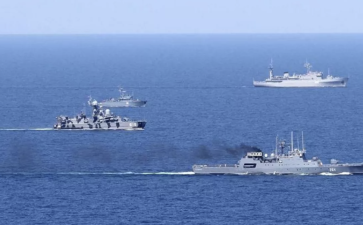
Amid heightened tensions in West Asia, naval forces from Iran, Russia and China are set to conduct a joint exercise in waters around the Strait of Hormuz. The drill, named Maritime Security Belt 2026, comes at a time of expanded United States military deployment in the Gulf and continuing indirect talks on Iran’s nuclear programme. The exercise is expected to focus on maritime security, trade route protection and coordination among the participating navies.
Exercise Objectives
The participating forces will carry out coordinated manoeuvres involving surface combatants, logistical vessels and naval aviation units. The drill is also expected to include anti-piracy operations, search-and-rescue missions, communication exercises and simulated escort operations for commercial shipping. Such exercises are intended to improve interoperability and demonstrate readiness in a strategically sensitive maritime zone.
Strategic Significance of the Strait
The Strait of Hormuz is one of the world’s most important energy chokepoints. Around 17 to 20 million barrels of oil pass through it daily, accounting for nearly one-fifth of global oil consumption. Large volumes of liquefied natural gas also move through the route. Any disruption in the strait can affect global energy prices, shipping insurance costs and supply chains across Asia, Europe and beyond.
US Military Posture in the Gulf
The United States has reinforced its presence in the region by deploying the USS Abraham Lincoln and USS Gerald R. Ford, placing two carrier strike groups within the US Central Command area of responsibility. Additional naval assets, including Arleigh Burke-class destroyers and littoral combat ships, are operating near the Persian Gulf and the Strait of Hormuz. US air assets remain stationed at bases in Qatar, Jordan and other regional partners.
Iran Nuclear Tensions and Regional Security
The drills are taking place against the backdrop of long-running disputes over Iran’s uranium enrichment and missile programme. The United States has sought to restrict these activities through sanctions and military pressure, while Iran insists its nuclear programme is civilian in nature. The region also remains affected by earlier strikes on Iranian nuclear facilities and subsequent missile and drone exchanges, keeping maritime and nuclear security high on the global agenda.
Last Modified: April 28, 2026