
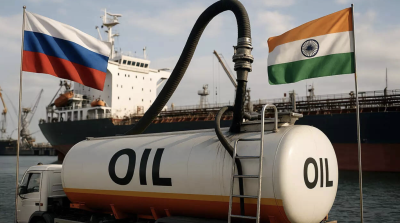
India’s engagement with the Weimar Triangle in Paris has drawn attention amid rising tensions between New Delhi and Washington over Russian oil purchases. Poland has expressed satisfaction over India’s reduction in imports from Moscow, signalling support for India at a time when the United States is considering stronger tariff action against countries buying Russian energy.
India’s First Weimar Triangle Engagement
External Affairs Minister S. Jaishankar took part in India’s first-ever interaction with the Weimar Triangle format. The meeting included France’s Jean-Noël Barrot, German representatives and Poland’s Radosław Sikorski. The talks focused on European cooperation, security concerns and wider diplomatic engagement with India.
Poland’s Position on Russian Oil
Poland said it was pleased that India had cut back on Russian oil imports. The remark linked reduced imports to efforts to weaken Russia’s war financing. Poland’s stance is notable because the Weimar Triangle has often discussed European security, especially the conflict involving Russia and Ukraine.
US Pressure on India
The development comes amid renewed pressure from the United States over India’s energy trade with Russia. Washington has already imposed high tariffs on some Indian goods and is considering further punitive duties on countries that continue to buy Russian oil or uranium. The proposed measures could raise tariffs sharply if enacted.
Weimar Triangle and Strategic Context
The Weimar Triangle was formed in 1991 by France, Germany and Poland to promote European integration, political dialogue, security cooperation and cultural ties. India’s participation in this format reflects growing diplomatic outreach with Europe. The meeting also comes ahead of further India-Poland discussions, including Sikorski’s planned visit to India next week.
Last Modified: April 25, 2026