
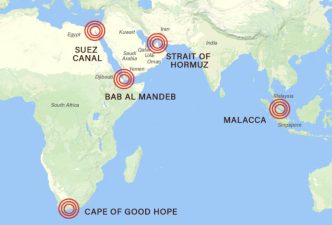
Several narrow maritime routes serve as critical chokepoints for global trade and energy supplies. These passages influence international commerce, energy security, and geopolitical dynamics.
Strait of Hormuz
The Strait of Hormuz is a 21-mile wide passage between the Persian Gulf and the Gulf of Oman. Approximately 20% of the world’s oil passes through this strait. It is a strategic geopolitical lever, with threats of blockade from Iran or the United States impacting global energy markets. The strait is located near southern Iran and is frequently the site of military exercises.
Bab-el-Mandeb Strait
The Bab-el-Mandeb connects the Red Sea to the Gulf of Aden and the Arabian Sea. It is a primary route to the Mediterranean Sea. The area has witnessed asymmetric warfare, including attacks by Houthi rebels on commercial shipping, affecting maritime security.
Strait of Malacca
The Strait of Malacca links the Indian Ocean to the South China Sea and Pacific Ocean. It handles about 25% of global trade. The strait is central to the Indo-Pacific power balance, with any blockade potentially disrupting supply chains for East Asian manufacturing hubs.
Suez Canal
The Suez Canal in Egypt connects the Mediterranean Sea to the Red Sea. It significantly reduces shipping time by avoiding a 9,000 km detour around Africa. Even minor disruptions in the canal cause substantial delays and increased fuel costs for global trade.
Panama Canal
The Panama Canal connects the Atlantic and Pacific Oceans through Central America. It is vital for international maritime trade. Recently, record low water levels caused by climate change have reduced the canal’s daily transit capacity, leading to vessel backlogs.
Last Modified: April 20, 2026