
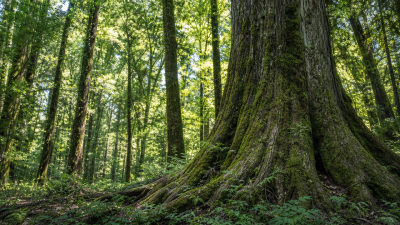
Recent studies (Science Advances, 12 Jun 2026; PNAS, 16 Jun 2026; Ecology Letters, 22 Jun 2026) report that trees continue photosynthesis after seasonal wood growth stops, altering the partitioning of assimilated carbon.
Primary empirical findings
- Decoupling of photosynthesis and growth: Photosynthetic carbon uptake can continue weeks to months after cambial wood growth ceases.
- Eastern US oaks: ~36% of annual carbon assimilation occurred after seasonal wood growth stopped (Science Advances, 12 Jun 2026).
- California oaks: Growth occurred Dec–Apr but halted by Aug; ~26% of annual uptake happened post‑growth.
- Tropical plants: Global analyses indicate some tropical vegetation absorbs substantially less net CO2 than earlier models implied, potentially near carbon neutral (PNAS, 16 Jun 2026).
- Subtropical forests: Increased neighbourhood tree diversity reduces competitive pressure as forests age and helps maintain higher biomass (Ecology Letters, 22 Jun 2026).
Processes and mechanisms
- Growth limitation: Aridity and heat constrain cell expansion and wood formation more strongly than photosynthetic carbon fixation.
- Carbon allocation: Post‑growth assimilates are routed to foliage, metabolism or temporary starch (non‑structural carbohydrates), which return CO2 to the atmosphere faster than wood.
- Modelling assumption at issue: Many Earth‑system models equate photosynthesis with proportional long‑term wood carbon storage; decoupling invalidates that simplification.
IASPOINT Booster Facts
- Key terms: Net Primary Production (NPP), Gross Primary Production (GPP), Carbon Use Efficiency (CUE), Non‑Structural Carbohydrates (NSC).
- Journals/dates: Science Advances 12 Jun 2026; PNAS 16 Jun 2026; Ecology Letters 22 Jun 2026.
- Institutions: Lamont‑Doherty Earth Observatory (Columbia Univ.), Univ. of Western Australia, Institute of Botany (Chinese Academy of Sciences).