
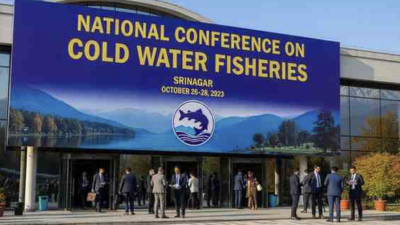
India will host a first-of-its-kind National Conference on Cold Water Fisheries at the Sher-e-Kashmir International Conference Centre, Srinagar, on 14 March 2026. The conference will focus on sustainable use of India’s cold-water aquaculture potential, especially in Himalayan and other high-altitude regions. It will also show policy support, infrastructure expansion, and market linkages for fish farmers and allied stakeholders.
Cold-Water Fisheries in India
Cold-water fisheries are concentrated in Jammu and Kashmir, Ladakh, Himachal Pradesh, Uttarakhand, Arunachal Pradesh, Sikkim, and select high-altitude and peninsular regions. These areas contain rivers, streams, lakes, and reservoirs suited to species such as Rainbow Trout, Brown Trout, and Mahseer. India has identified more than 278 cold-water fish species, making the sector important for livelihoods, nutrition, and biodiversity conservation.
Government Support and Investment
Under the Pradhan Mantri Matsya Sampada Yojana (PMMSY), the Department of Fisheries has sanctioned ₹2,299.56 crore for cold-water states. The support covers hatcheries, raceways, seed and feed systems, cold-chain facilities, transport networks, and livelihood activities. Across the fisheries sector, investment commitments have crossed ₹39,272 crore, with major approvals already in place for infrastructure and production systems.
Key Initiatives and Conference Agenda
The conference will release the Model Guidelines for the Development of Cold Water Fisheries. It will also distribute benefits to traditional and progressive fishers, cooperatives under PM-MKSSY, and Kisan Credit Card beneficiaries. Awards will be given to the best Fisheries Farmer Producer Organisations and start-ups from Jammu and Kashmir. Technical sessions will cover research, innovation, technology adoption, institutional convergence, entrepreneurship, and supply-chain strengthening.
National Vision and Strategic Importance
The National Vision for Cold Water Fisheries 2030 aims to double production of premium species such as trout and mahseer. India still imports salmon and premium trout, which shows the need for stronger domestic capacity. The conference is expected to build a shared roadmap for sustainable growth, higher farmer income, and improved nutritional security in remote mountain regions.
Last Modified: April 29, 2026