
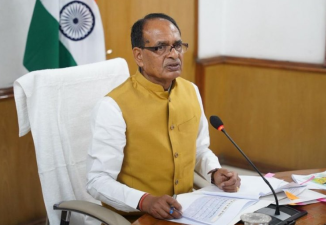
The Department of Agriculture and Farmers’ Welfare is organizing the two-day National Conference on Agriculture for Kharif Campaign 2026 at the NASC Complex, Pusa, New Delhi. Chaired by Union Minister for Agriculture and Farmers Welfare Shivraj Singh Chouhan, the apex convention coordinates policy objectives between the Central Government, State Governments, and agricultural research institutions. The 2026 session aims to formulate operational strategies for the upcoming monsoon cropping cycle. Key areas of focus include climate-resilient crop varieties, supply-chain positioning for inputs, expansion of domestic pulses, and digital credit delivery mechanisms to secure nationwide food output.
Core Pillars of the 2026 Campaign
Self-Reliance and Production Growth
- Crop Diversification: Shifting acreage away from water-intensive monoculture crops, like paddy in low water-table zones, toward climate-adaptive varieties.
- Pulses and Oilseeds Mission: Expanding domestic cultivation of pigeon pea (Tur), black gram (Urad), and oilseeds to decrease dependence on agricultural imports.
- Seed Distribution Framework: Planning state-wise allocation of High-Yielding Varieties (HYV) and bio-fortified seeds before the onset of the Southwest monsoon.
Sustainability and Khet Bachao
- Natural Farming Clusters: Institutionalizing chemical-free agricultural practices across designated river corridor belts to improve long-term soil health.
- Micro-Irrigation Convergence: Integrating localized drip and sprinkler systems with canal commands to optimize water use efficiency per drop.
- Soil Health Advisory: Utilizing updated soil card inventories to ensure balanced application of macronutrients and secondary micronutrients.
Infrastructure and Financial Risk Management
- Digital Credit Delivery: Scaling electronic processing for crop loans through rural banking networks to remove local administrative delays.
- Post-Harvest Integration: Creating localized cold chains and dry storage points near rural markets using the Agriculture Infrastructure Fund (AIF).
- Crop Insurance Coverage: Expanding local data collection models under the Pradhan Mantri Fasal Bima Yojana (PMFBY) to ensure timely claim settlements for weather anomalies.
Strategic Input Planning and Management
Seed and Fertilizer Allocation
The conference evaluates state-wise balance sheets for critical input components, ensuring buffer stocks are placed at regional distribution centers before active sowing begins.
Agrochemical and Pesticide Safety
- Prescribing strict quality checks for available bio-pesticides and chemical formulations at state analytical laboratories.
- Issuing updated regional lists of banned or restricted chemical substances to prevent permanent ecological and soil degradation.
Mechanization and Custom Centers
- Allocating financial assistance to set up Custom Hiring Centres (CHCs) to help smallholder farm units access heavy equipment.
- Promoting drone-based application models for liquid fertilizers and specialized crop health monitoring.
Thematic Framework of the Conference
| Theme Domain | Operational Objective | Implementation Tool |
| Atmanirbharta & Growth | Self-sufficiency in critical crop sectors. | Targeted cluster development for pulses. |
| Climate Resilience | Mitigating weather and monsoon fluctuations. | Stress-tolerant, short-duration seed varieties. |
| Digital Agriculture | Improving extension delivery and tracking. | Unified farmer registries and GIS mapping. |
| Financial Security | Securing credit access and covering losses. | PMFBY integration with real-time weather logs. |
Extension Outreach and Knowledge Delivery
Krishi Vigyan Kendra (KVK) Network
- Harnessing the field presence of KVK units to demonstrate localized crop protection techniques to farming communities.
- Conducting block-level simulation drills to train local extension agents on managing emerging pest outbreaks.
Mobile and Mass Media Services
- Broadcasting weekly weather advisories and region-specific crop scheduling via regional language radio and digital networks.
- Organizing direct interaction windows connecting field groups with research scientists from the Indian Council of Agricultural Research (ICAR).
IASPOINT Booster Facts for UPSC
- Constitutional Domain: Agriculture is listed under Entry 14 of the State List (List II) within the Seventh Schedule of the Constitution of India. However, agricultural research, education, and specific procurement activities involve concurrent and union-level interventions under entry items dealing with price control and interstate commerce.
- Kharif Season Taxonomy: The Kharif cropping window matches the Southwest Monsoon season. Sowing begins between June and July, with harvesting taking place between September and October. Key crops include paddy, maize, sorghum (Jowar), pearl millet (Bajra), cotton, jute, groundnut, and soybean.
- Rainfall Dependence: Over 50% of India’s net sown area depends entirely on monsoon precipitation, making the timely organization of the National Kharif Campaign critical for overall food security management.
- NASC Complex Identity: The National Agricultural Science Centre (NASC) Complex, located in Pusa, New Delhi, serves as a central hub housing major institutions of the Indian Council of Agricultural Research (ICAR).
- Zonal Consultations Mechanism: The national conference is preceded by decentralized zonal consultations. These split states into distinct geographic clusters (North, South, East, West, and North-East) to isolate regional agro-climatic demands before drafting final central policy frameworks.