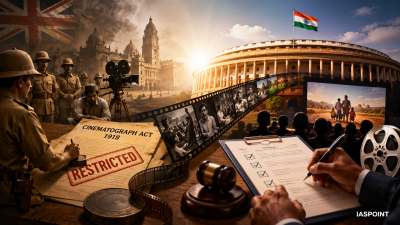
The regulation of cinematic content in India is a legacy of the colonial era, evolving from a tool of political suppression to a complex regulatory framework under the...
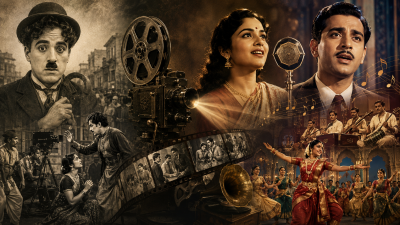
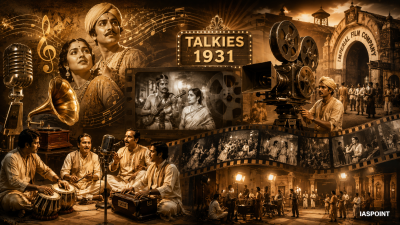
The shift from silent films to talkies was the first major technological disruption in Indian cinema, fundamentally altering narrative structures and the role of music. Tanar Sound System:...
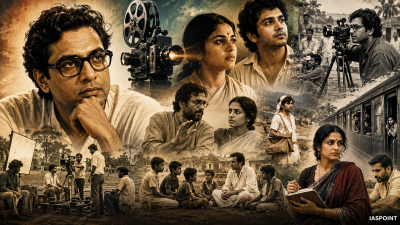
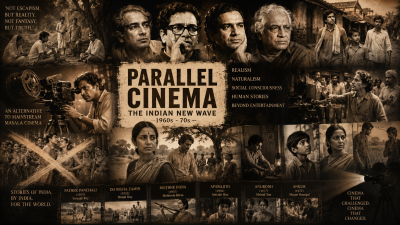
The New Wave Cinema, often synonymous with the Indian New Wave or Art Cinema, represented a formal break from the escapist "Masala" traditions of Bombay. While Parallel Cinema...
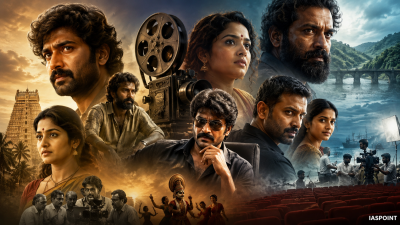
Regional cinema refers to films produced in Indian languages other than Hindi. While Hindi cinema (Bollywood) often dominates the national narrative, regional industries have historically been the cradle...
Parallel Cinema, also known as the Indian New Wave or Art Cinema, emerged as a distinct movement in the late 1940s and peaked during the 1960s and 70s....
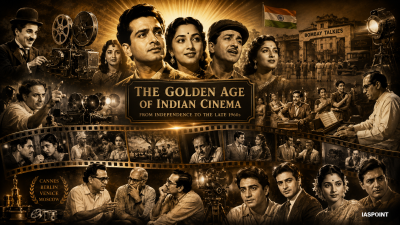
The "Golden Age" of Indian Cinema refers to the period following India's independence until the late 1960s. This era is characterized by the confluence of technical maturity, the...
The year 1931 marked a tectonic shift in Indian Art and Culture with the introduction of synchronized sound. This transition was not merely technological but cultural, as it...
The Anusandhan National Research Foundation (ANRF) initiated programme called the Mission for Advancement of High-impact Areas on Electric Vehicles (MAHA-EV). This initiative aims to tackle critical challenges in...
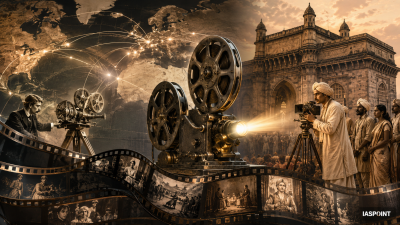
The inception of Indian cinema was not a localized event but a subset of a global technological revolution. The Genesis: Arrival of the Cinématographe (1896) The history of...
The Indian Rupee symbol (₹) is the character used to represent the official currency of India. Its adoption in 2010 marked India's entry into an elite group of...