
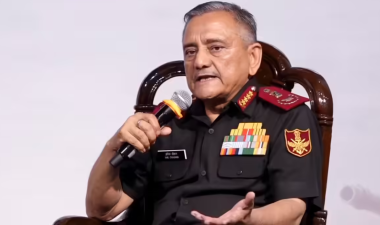
During the Kalam and Kavach 3.0 dialogue held on 14 May 2026, Defence Minister Rajnath Singh emphasized the integration of jointness and self-reliance within India’s national security framework. The high-level conclave, themed ‘Taking JAI (Jointness, Atmanirbharta, and Innovation) Forward with I² (Indigenisation and International Collaboration),’ brought together senior military commanders, scientific personnel, and policymakers. The discussions focused on creating synchronized multi-domain commands spanning land, sea, air, cyber, and space networks. The platform highlighted India’s transition toward independent defense ecosystems to preserve strategic autonomy amid highly volatile global supply chains and changing formats of hybrid warfare.
The JAI Triad and Structural Integration
The modern battlefield requires a shift from traditional single-service operations to a unified defense architecture. This approach aims to pool resources, optimize asset allocation, and systematically reduce institutional redundancy.
Multi-Domain Command Optimization
Modern tactical warfare relies heavily on the cross-functional utilization of conventional services and specialized units. The operational domains are structured to work in unison rather than in isolated silos:
- Conventional Fronts: Merging combat and logistical assets of the Indian Army, Indian Navy, and Indian Air Force.
- Strategic Fronts: Coordinating actions with the Defence Cyber Agency (DCyA), Defence Space Agency (DSA), and the Armed Forces Special Operations Division (AFSOD).
Theatreisation and Higher Defence Reforms
Theatreisation involves reorganizing the current 17 independent functional commands of the Army, Navy, and Air Force into unified geographical Theatre Commands. This structure differentiates force application (fighting the war) from force generation (training and logistics). The integration strategy uses a consensus-driven approach to manage interstate and inter-service assets under a single operational commander.
Operation Sindoor and Modern Tactical Lessons
Chief of Defence Staff (CDS) General Anil Chauhan highlighted Operation Sindoor, launched following a major terror attack, as a turning point in India’s higher defense organization and regional dominance.
Multi-Domain Precision Execution
Operation Sindoor lasted for 88 hours, during which Indian forces maintained complete control over the escalation matrix. The campaign focused on targeting cross-border terror networks and retaliating against hostile airbases. It proved the efficiency of long-range precision guided strikes, accurately neutralizing targets from distances between 300 and 400 kilometers away.
Shift to Non-Contact and Non-Kinetic Warfare
The operation relied heavily on data superiority, advanced space-based surveillance, and cyber tracking rather than large-scale troop mobilizations. The success of this non-contact approach demonstrated how battlefield transparency can force adversaries into hurried institutional re-engineering. For instance, the conflict prompted Pakistan to replace its Joint Chiefs of Staff Committee framework with a concentrated Chief of Defence Forces (CDF) role.
Technological Transformation and Data Centricity
The military establishment is modifying its internal doctrine to incorporate rapid technological advancements, explicitly declaring 2026 as the Year of Networking and Data Centricity.
Transition to Data-Centric Warfighting
The armed forces are shifting from net-centric platforms to data-centric systems. This transition utilizes Artificial Intelligence (AI) as core operational infrastructure. AI-driven algorithms process real-time sensor feeds to achieve total battlefield transparency, removing the element of tactical surprise.
Autonomous and Unmanned Systems
The updated defense doctrine prioritizes the deployment of indigenous autonomous drones and decentralized counter-drone grids. These unmanned platforms are engineered to function alongside human personnel, providing surge capacity and minimizing human casualties in contested territorial perimeters.
Defence Economics and Production Milestones
India’s domestic production and export structures have grown, changing the country’s status from a leading global arms importer to a self-sufficient exporter.
Export and Production Trajectory
The defense manufacturing sector achieved a total production valuation of Rs 1.54 lakh crore during the 2025-26 fiscal year. Concurrently, defense exports surged from a baseline of Rs 686 crore a decade ago to Rs 38,424 crore.
Medium-Term Targets (By 2029-30)
The Ministry of Defence has laid down clear fiscal benchmarks to expand its manufacturing ecosystem by the end of the decade:
- Annual Production Target: Rs 3,000,000,000,000 (Rs 3 Lakh Crore).
- Annual Export Target: Rs 500,000,000,000 (Rs 50,000 Crore).
Consolidated Strategic Parameters
| Parameter | Traditional Defence Model | Modern Integrated Model (JAI) |
| Command Architecture | Service-specific silos (17 independent commands) | Joint Geographical Theatre Commands |
| Warfare Orientation | Kinetic and Contact-based physical engagements | Multi-domain, Non-contact, Data-centric operations |
| Procurement Strategy | Import-heavy with foreign vendor dependencies | Local design, development, and strategic partnerships |
| Technology Focus | Hardware-centric armored and manual systems | Software-driven AI, Cyber, and Autonomous swarms |
IASPOINT Booster Facts for UPSC
- Kalam and Kavach Dialogue: A premier defense strategic dialogue platform organized at the Manekshaw Centre in New Delhi to translate high-level reform policies into executable industrial and military pathways.
- Chief of Defence Staff (CDS): Created based on the Kargil Review Committee recommendations, the CDS acts as the permanent Chairman of the Chiefs of Staff Committee (CoSC) and the principal military adviser to the Ministry of Defence.
- Innovations for Defence Excellence (iDEX): A flagship program launched to foster innovation and technology development in defense and aerospace by engaging startups, MSMEs, and research institutes.
- Positive Indigenisation Lists (PILs): Memorandums issued by the Department of Military Affairs that ban the import of specified defense items, weapon systems, and ammunition to boost domestic procurement.
- Defence Cyber Agency (DCyA): A tri-service command of the Indian Armed Forces engineered to mitigate state-sponsored cyber threats, manage digital warfare assets, and protect critical network infrastructures.
- Defence Space Agency (DSA): A joint service organization tasked with operating India’s space-warfare and satellite intelligence assets, closely linked with the Indian Space Research Organisation (ISRO).