
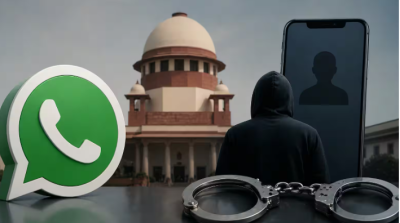
WhatsApp banned over 9,400 accounts linked to digital arrest scams in India after a 12-week investigation that began in January 2026. The matter reached the Supreme Court of India in suo motu proceedings that began in October 2025 after a senior citizen couple lost ₹1.5 crore to fraudsters posing as CBI, IB and judicial officials.
Digital Arrest Scam
Digital arrest is a cyber fraud method in which scammers impersonate police, intelligence or court officials and threaten arrest to extort money. The fraudsters use names such as Delhi Police, CBI and ATS Department, along with official-looking logos, to create false authority.
Investigation And Enforcement Tools
The investigation followed concerns raised by the Indian Cyber Crime Coordination Centre (I4C), the Ministry of Electronics and Information Technology (MeitY) and the Department of Telecommunications (DoT). WhatsApp used logo-matching systems, display-name logging, large language models and a database of known scam assets to detect linked accounts and repeat offenders.
- Government agencies initially flagged about 3,800 suspicious accounts.
- WhatsApp’s internal systems expanded the action to thousands of additional linked profiles and networks.
- Most of the scam operations targeting Indian users were traced to organised centres in Southeast Asia, especially Cambodia.
Legal And Technical Measures
WhatsApp is working on SIM binding, which links an account to a physical SIM card. The platform has also agreed to retain deleted account data for at least 180 days and is examining the feasibility of blocking device IDs.
Complaint Data
Government data records over 2.41 lakh complaints related to digital arrest scams in India. The reported losses in these cases stand at approximately Rs 30,000 crore.
Last Modified: April 29, 2026