
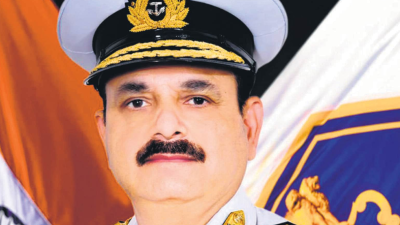
The Government of India appointed Vice Admiral Sanjay Vatsayan as the next Flag Officer Commanding-in-Chief (FOC-in-C) of the Western Naval Command, effective 10 May 2026. He transitions into this strategic role from his current post as the 47th Vice Chief of Naval Staff. Vice Admiral Vatsayan succeeds Vice Admiral Krishna Swaminathan, who will elevate to the position of Chief of the Naval Staff on 31 May 2026 following the retirement of Admiral Dinesh Kumar Tripathi. Operating from its headquarters in Mumbai, the Western Naval Command acts as the primary operational arm for securing India’s western maritime borders and preserving trade security along critical sea lanes in the Arabian Sea.
Profile of Vice Admiral Sanjay Vatsayan
Educational and Professional Background
Vice Admiral Sanjay Vatsayan is an alumnus of the 71st course of the National Defence Academy, Khadakwasla, Pune. He received further professional training at the Indian Naval Academy before securing commissions and advanced qualifications from the Defence Services Staff College in Wellington, the Naval War College in Goa, and the National National Defence College in New Delhi.
Service History and Specialisation
- Commissioning: Formally commissioned into the Executive Branch of the Indian Navy on 1 January 1988.
- Core Specialisation: He is a specialist in Gunnery and Missile Systems, holding expertise in naval surface warfare and weaponry management.
- Fleet Command: Served as the Flag Officer Commanding Eastern Fleet (FOCEF) from February 2020 to February 2021, leading operational deployments during a phase of elevated regional tensions following the Galwan Valley standoff.
- Joint Staff Appointments: Served as Deputy Chief of Integrated Defence Staff (Operations) and later as Deputy Chief of Integrated Defence Staff (Policy Planning & Force Development) at HQ IDS.
Key Naval Warship Commands
Throughout his career spanning more than three decades, Vice Admiral Vatsayan served with the pre-commissioning and commissioning crews of major combatants. His command profile includes:
- INS Sahyadri: Commissioning Commanding Officer of this indigenously built Shivalik-class stealth multi-role frigate.
- INS Kuthar: Commanded this Khukri-class missile corvette.
- INS Mysore: Served on the commissioning crew and later as Executive Officer of this Delhi-class guided-missile destroyer.
- INS Nishank, INS Vibhuti, and INS Nashak: Commanded and served on these Veer-class missile vessels.
Institutional Structure of Indian Navy Commands
Geographical and Operational Demarcation
The Indian Navy manages its coastal and oceanic responsibilities through three operational commands, each led by a Flag Officer Commanding-in-Chief holding the rank of Vice Admiral.
| Command Name | Headquarters | Primary Area of Responsibility |
|---|---|---|
| Western Naval Command (WNC) | Mumbai, Maharashtra | Arabian Sea, Western coast, International maritime boundaries with Pakistan, and access channels toward the Persian Gulf and Red Sea. |
| Eastern Naval Command (ENC) | Visakhapatnam, Andhra Pradesh | Bay of Bengal, Eastern coast, Malacca Strait approaches, and humanitarian operations in Southeast Asia. |
| Southern Naval Command (SNC) | Kochi, Kerala | Training command for the entire navy, coordination of deep ocean resource monitoring, and southern island security. |
Export to Sheets
The Western Naval Command Ecosystem
Often called the “Sword Arm” of the Indian Navy, the Western Naval Command hosts key operational assets, including the Western Fleet, the local ashore support infrastructure at INS Angre, and the premier naval base at Karwar (INS Kadamba), developed under Project Seabird. It plays a lead role in anti-piracy patrolling in the Gulf of Aden and ensures safe passage for commercial shipping through regional chokepoints.
Integrated Military Architecture and Higher Command
Roles of Chief and Vice Chief of Naval Staff
The administrative control and execution of naval policy involve distinct structures at Integrated Headquarters, Ministry of Defence (Navy):
- Chief of the Naval Staff (CNS): The highest-ranking operational officer who heads the Indian Navy, advises the Union Government on maritime defense matters, and acts as a member of the Chiefs of Staff Committee.
- Vice Chief of the Naval Staff (VCNS): Directly assists the CNS, heading the staff branch responsible for naval operations, intelligence, logistics, and indigenous project planning.
Joint Commands vs Single-Service Commands
While WNC, ENC, and SNC operate as single-service commands answering to Naval Headquarters, India also operates unified structures. The Andaman and Nicobar Command (ANC), headquartered in Port Blair, exists as India’s first and only operational Tri-services Theater Command. It integrates assets from the Army, Navy, Air Force, and Coast Guard to secure the strategic Malacca Strait transit corridor.
IASPOINT Booster Facts for UPSC
Military Decorations and Gallantry Awards
Vice Admiral Sanjay Vatsayan has received multiple national honors, including the Param Vishisht Seva Medal (PVSM), the Ati Vishisht Seva Medal (AVSM) in 2021, and the Nao Sena Medal (NM). Under the Indian honors system, the PVSM and AVSM represent classes of distinguished service of an exceptional order rendered by armed forces personnel during peacetime.
Project Seabird and Karwar Naval Base
Project Seabird is India’s largest naval infrastructure project, aimed at creating a deep-water naval base at Karwar, Karnataka. Located south of Goa, this base provides the Western Naval Command with exclusive military docking facilities completely isolated from commercial shipping traffic, enhancing operational security for major platforms like aircraft carriers and submarines.
Operational Precedence of the Western Fleet
The Western Fleet achieved historical significance during the 1971 Indo-Pakistani War through Operation Trident and Operation Cyclone. Naval missile boats executed surprise night strikes on the Karachi harbor, crippling the Pakistani naval capabilities and establishing total maritime dominance over the Arabian Sea.
Last Modified: May 19, 2026